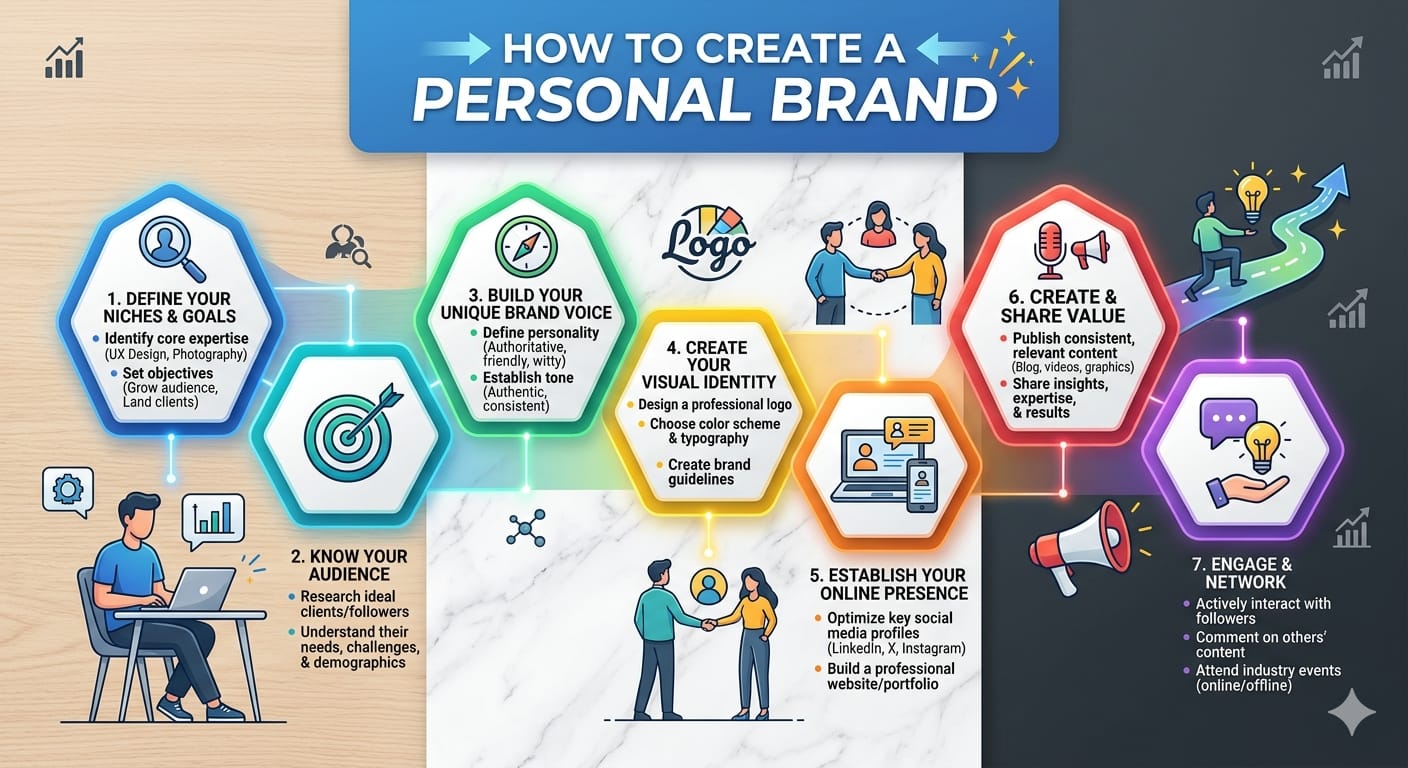
In today’s digital and highly competitive world, having a strong personal brand is no longer optional—it is essential. Whether you are an entrepreneur, professional, student, or content creator, your personal brand defines how others perceive you and what you stand for. It shapes your reputation, influences opportunities, and helps you stand out in a crowded marketplace.
Creating a personal brand is not about self-promotion alone; it is about authenticity, value, and consistency. It involves communicating your unique identity, skills, and vision in a way that resonates with your audience. This comprehensive guide explores how to build a powerful personal brand from the ground up.
What Is a Personal Brand?
A personal brand is the image and perception people have of you based on your skills, values, personality, and online presence. It is how you present yourself to the world and how others recognize you.
Your personal brand includes:
- Your expertise
- Your values
- Your communication style
- Your online and offline presence
According to
Forbes
a strong personal brand can significantly impact career growth and business success.
Why Personal Branding Matters
Personal branding offers numerous benefits:
- Builds credibility and trust
- Differentiates you from others
- Attracts opportunities
- Enhances career growth
- Expands your network
In a digital-first world, your online presence often serves as your first impression.
Step-by-Step Guide to Creating a Personal Brand
1. Define Your Purpose and Goals
Start by understanding why you want to build a personal brand.
Ask yourself:
- What do I want to achieve?
- What impact do I want to make?
Clear goals provide direction and focus.
2. Identify Your Strengths and Skills
Your brand should reflect your unique abilities.
- List your strengths
- Identify your expertise
- Highlight what sets you apart
Self-awareness is key to authenticity.
3. Understand Your Audience
Know who you want to reach.
- What are their needs?
- What problems can you solve?
Understanding your audience helps you create relevant content.
4. Define Your Brand Identity
Your brand identity includes:
- Your values
- Your tone and voice
- Your visual style
Consistency in identity builds recognition.
5. Craft Your Personal Story
Storytelling makes your brand relatable.
Include:
- Your journey
- Challenges you’ve overcome
- Lessons you’ve learned
Your story connects you with your audience.
6. Build Your Online Presence
A strong online presence is essential.
Key platforms include:
- Social media
- Personal website
- Professional networks
7. Create Valuable Content
Content is a powerful tool for building your brand.
Share:
- Insights
- Tips
- Experiences
Consistent content builds authority.
8. Be Authentic
Authenticity builds trust.
- Be genuine
- Stay true to your values
- Avoid copying others
People connect with real personalities.
9. Network and Build Relationships
Engage with others in your field.
- Attend events
- Connect online
- Collaborate
Networking expands your reach.
10. Stay Consistent
Consistency is crucial.
- Maintain your message
- Post regularly
- Align actions with values
Consistency builds recognition and trust.
Personal Branding on Social Media
Social media plays a major role in personal branding.
Tips:
- Choose platforms wisely
- Share valuable content
- Engage with your audience
- Maintain a professional image
Each platform offers unique opportunities.
The Role of Content in Personal Branding
Content helps establish authority and visibility.
Types of content:
- Articles
- Videos
- Podcasts
- Social media posts
High-quality content attracts and retains your audience.
Building Credibility and Trust
Trust is the foundation of a strong brand.
Build credibility by:
- Delivering value
- Being consistent
- Showing expertise
Personal Branding for Career Growth
A strong personal brand can:
- Increase job opportunities
- Enhance professional reputation
- Attract recruiters
Employers often research candidates online before hiring.
Personal Branding for Entrepreneurs
For entrepreneurs, personal branding helps:
- Build customer trust
- Promote products or services
- Differentiate from competitors
Common Mistakes to Avoid
- Lack of clarity
- Inconsistency
- Over-promotion
- Ignoring feedback
Avoiding these mistakes strengthens your brand.
Measuring Your Personal Brand
Track your progress through:
- Engagement metrics
- Follower growth
- Opportunities received
Regular evaluation helps improvement.
Evolving Your Personal Brand
Your brand should evolve with you.
- Update your goals
- Learn new skills
- Adapt to changes
Growth keeps your brand relevant.
FAQs
What is a personal brand?
It is how you present yourself and how others perceive you.
Why is personal branding important?
It builds credibility and creates opportunities.
How do I start building a personal brand?
Define your goals, identify strengths, and create content.
Can personal branding help my career?
Yes, it enhances visibility and attracts opportunities.
What platforms should I use?
Social media and professional networks like LinkedIn.
How often should I post content?
Consistency matters more than frequency.
What is authenticity in branding?
Being genuine and true to yourself.
How do I grow my audience?
Provide value and engage with others.
Can anyone build a personal brand?
Yes, with effort and consistency.
How long does it take?
It takes time and continuous effort.
Conclusion
Creating a personal brand is a powerful way to define your identity, communicate your value, and achieve your goals. It is not about perfection—it is about authenticity, consistency, and growth.
By understanding your strengths, connecting with your audience, and sharing meaningful content, you can build a personal brand that stands out and creates lasting impact.
In a world where perception matters, your personal brand is your voice. Use it wisely, nurture it consistently, and let it reflect the best version of who you are.