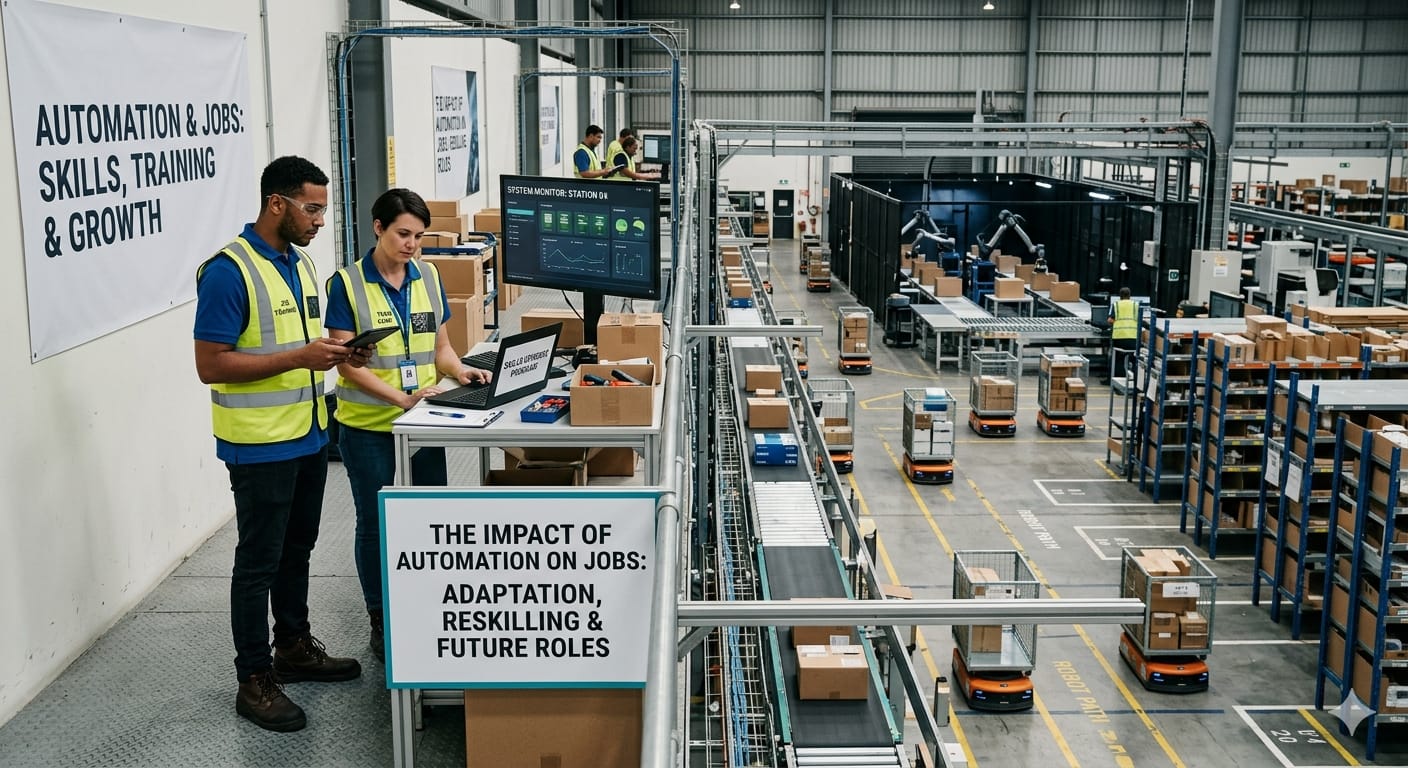
Automation is transforming the global workforce at an unprecedented pace. From manufacturing robots to artificial intelligence systems, machines are increasingly capable of performing tasks that once required human effort. While automation brings efficiency, productivity, and innovation, it also raises important questions about employment, job security, and the future of work.
Understanding the impact of automation on jobs is essential for workers, businesses, and policymakers. It helps us prepare for changes, adapt to new opportunities, and address the challenges that come with technological advancement.
What Is Automation?
Automation refers to the use of technology to perform tasks with minimal human intervention. It includes:
- Robotics
- Artificial intelligence (AI)
- Machine learning
- Software automation
The Evolution of Automation
Automation is not new. It has evolved over time:
- Industrial Revolution: Mechanization of labor
- 20th century: Assembly lines and machinery
- Digital age: Computers and software
- Modern era: AI and robotics
Each phase has changed how work is performed.
How Automation Impacts Jobs
Automation affects jobs in multiple ways, both positively and negatively.
Job Displacement
One of the biggest concerns is job loss.
Automation can replace tasks such as:
- Repetitive manufacturing work
- Data entry
- Routine administrative tasks
This can lead to unemployment in certain sectors.
Job Creation
Automation also creates new jobs.
Examples include:
- Technology development
- Data analysis
- Robotics maintenance
According to
World Economic Forum
automation is expected to create millions of new roles.
Job Transformation
Many jobs are not eliminated but transformed.
Workers may:
- Use technology to perform tasks
- Focus on more complex responsibilities
- Develop new skills
Increased Productivity
Automation improves efficiency.
Benefits include:
- Faster production
- Reduced errors
- Lower costs
Changes in Skill Requirements
Automation increases demand for:
- Technical skills
- Problem-solving abilities
- Creativity
- Emotional intelligence
Low-skill jobs are more vulnerable.
Industries Most Affected by Automation
Manufacturing
Robots perform repetitive tasks.
Retail
Self-checkout systems and online platforms reduce staffing needs.
Transportation
Autonomous vehicles may impact drivers.
Healthcare
Automation assists with diagnosis and administration.
Finance
Algorithms handle data analysis and transactions.
Benefits of Automation
Efficiency and Productivity
Automation speeds up processes and reduces errors.
Cost Reduction
Businesses save on labor and operational costs.
Improved Safety
Machines can perform dangerous tasks.
Innovation
Automation drives technological advancement.
Challenges of Automation
Job Loss and Inequality
Some workers may lose jobs, increasing inequality.
Skill Gaps
Workers may lack skills needed for new roles.
Economic Disruption
Industries may face rapid changes.
Ethical Concerns
Automation raises questions about fairness and responsibility.
The Role of Education and Training
Education is key to adapting to automation.
Focus areas include:
- Technical skills
- Digital literacy
- Lifelong learning
Platforms like
Coursera
offer courses to develop relevant skills.
The Importance of Reskilling and Upskilling
Workers must continuously update skills.
- Reskilling: Learning new skills for different jobs
- Upskilling: Improving existing skills
This helps workers remain competitive.
The Role of Governments
Governments can support workers by:
- Creating education programs
- Providing social safety nets
- Encouraging job creation
Policies help manage automation’s impact.
Automation and the Future of Work
The future of work will likely include:
- Human-machine collaboration
- Flexible work environments
- Increased use of AI
Automation will reshape how work is done.
Balancing Automation and Human Skills
Human skills remain essential.
These include:
- Creativity
- Emotional intelligence
- Critical thinking
Machines cannot fully replace these abilities.
Strategies for Individuals
- Learn new skills
- Stay adaptable
- Embrace technology
- Focus on continuous learning
Preparation is key to success.
Strategies for Businesses
- Invest in employee training
- Use automation responsibly
- Balance efficiency with human needs
Businesses play a crucial role in transition.
Ethical and Social Considerations
Automation must be implemented responsibly.
Consider:
- Fair wages
- Job security
- Social impact
Ethical practices ensure sustainability.
FAQs
What is automation?
The use of technology to perform tasks with minimal human effort.
Does automation cause job loss?
It can, but it also creates new opportunities.
Which jobs are most at risk?
Repetitive and routine jobs.
Can automation create jobs?
Yes, especially in technology and innovation sectors.
What skills are important?
Technical, creative, and problem-solving skills.
How can workers adapt?
Through reskilling and continuous learning.
What role do governments play?
They support workers and regulate industries.
Is automation good or bad?
It has both benefits and challenges.
What is the future of work?
More collaboration between humans and machines.
How can I prepare?
Learn new skills and stay adaptable.
Conclusion
The impact of automation on jobs is complex and multifaceted. While it brings efficiency, innovation, and new opportunities, it also presents challenges such as job displacement and skill gaps.
The key to navigating this transformation lies in adaptability. By embracing lifelong learning, developing new skills, and leveraging technology, individuals can thrive in an automated world. At the same time, businesses and governments must work together to ensure that the benefits of automation are shared broadly and equitably.
Automation is not just about replacing jobs—it is about redefining work. With the right approach, it can lead to a future where technology enhances human potential and creates a more productive and inclusive society.