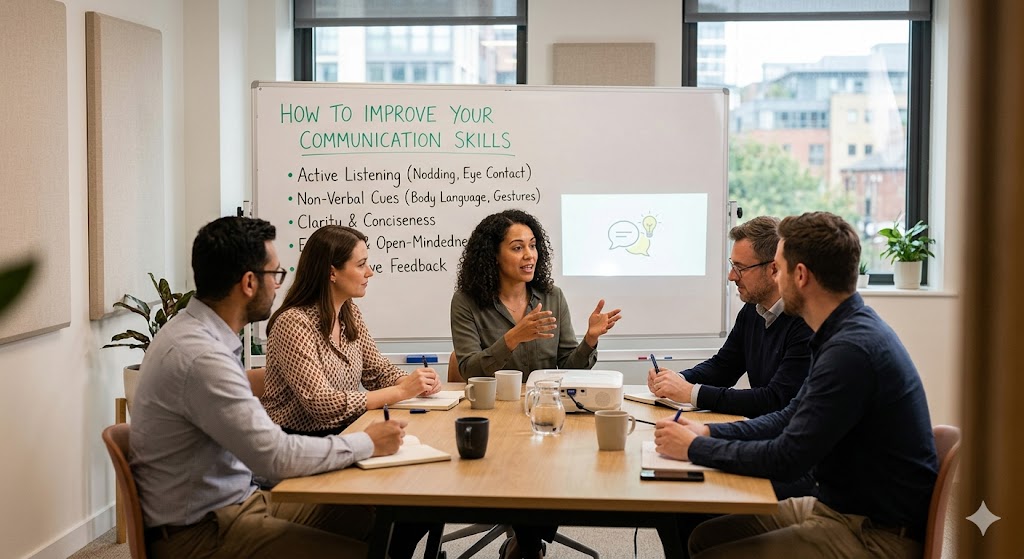
Communication is one of the most essential skills in both personal and professional life. Whether you are expressing ideas, building relationships, resolving conflicts, or leading a team, your ability to communicate effectively determines your success. Yet, many people struggle to convey their thoughts clearly or to truly understand others.
Improving communication skills is not about using complex words or speaking more—it’s about being clear, confident, empathetic, and intentional. This article explores practical strategies, techniques, and mindset shifts that can help you become a more effective communicator.
What Are Communication Skills?
Communication skills refer to the ability to convey information effectively and efficiently. They include:
- Verbal communication (speaking)
- Nonverbal communication (body language, facial expressions)
- Written communication
- Listening skills
Strong communication ensures that your message is understood as intended.
Why Communication Skills Are Important
Effective communication impacts every area of life.
It helps you:
- Build strong relationships
- Avoid misunderstandings
- Enhance teamwork
- Improve leadership abilities
- Increase career opportunities
Common Barriers to Effective Communication
Understanding barriers is the first step toward improvement.
Common obstacles include:
- Lack of clarity
- Poor listening
- Emotional reactions
- Cultural differences
- Distractions
Recognizing these barriers allows you to address them effectively.
Types of Communication
Verbal Communication
Involves spoken words and tone of voice.
Key aspects:
- Clarity
- Confidence
- Tone
Nonverbal Communication
Includes body language, gestures, and facial expressions.
Nonverbal cues often convey more than words.
Written Communication
Used in emails, messages, and reports.
Requires:
- Clear structure
- Proper grammar
- Concise language
Listening
An essential but often overlooked skill.
Active listening improves understanding and connection.
Strategies to Improve Communication Skills
1. Practice Active Listening
Active listening means fully focusing on the speaker.
- Maintain eye contact
- Avoid interrupting
- Ask clarifying questions
This builds trust and understanding.
2. Be Clear and Concise
Avoid unnecessary complexity.
- Use simple language
- Get to the point
- Organize your thoughts
Clarity prevents confusion.
3. Improve Your Body Language
Nonverbal communication plays a significant role.
- Maintain good posture
- Use appropriate gestures
- Show attentiveness
Positive body language reinforces your message.
4. Develop Emotional Intelligence
Understanding emotions improves communication.
- Recognize your feelings
- Empathize with others
- Manage reactions
Emotional intelligence enhances relationships.
5. Ask Questions
Questions show interest and improve understanding.
- Clarify doubts
- Encourage discussion
- Show engagement
6. Practice Empathy
Put yourself in others’ shoes.
- Understand perspectives
- Respect differences
- Respond thoughtfully
Empathy strengthens connections.
7. Expand Your Vocabulary
A strong vocabulary helps express ideas clearly.
- Read regularly
- Learn new words
- Practice usage
8. Improve Your Confidence
Confidence affects how your message is received.
- Practice speaking
- Prepare in advance
- Focus on your strengths
9. Manage Your Tone
Tone can change the meaning of your message.
- Stay calm
- Avoid aggression
- Use a respectful tone
10. Seek Feedback
Feedback helps identify areas for improvement.
- Ask for honest opinions
- Reflect on suggestions
- Apply changes
Communication Skills in the Workplace
Effective communication is essential for professional success.
It helps in:
- Team collaboration
- Leadership
- Conflict resolution
- Decision-making
Communication in Relationships
Strong communication builds healthy relationships.
Key elements include:
- Honesty
- Respect
- Active listening
- Emotional understanding
Improving Written Communication
To improve writing skills:
- Use clear structure
- Avoid jargon
- Proofread your work
- Be concise
Clear writing ensures your message is understood.
Overcoming Communication Anxiety
Many people feel nervous when communicating.
To overcome anxiety:
- Practice regularly
- Prepare ahead
- Focus on the message, not fear
- Take deep breaths
Confidence grows with practice.
The Role of Technology in Communication
Technology has transformed communication.
Tools include:
- Messaging apps
- Video conferencing
While convenient, they require careful use to avoid misunderstandings.
Cultural Awareness in Communication
In a globalized world, cultural differences matter.
- Respect different communication styles
- Avoid assumptions
- Be open-minded
Cultural awareness improves interactions.
Building Long-Term Communication Skills
Communication is a continuous learning process.
To improve over time:
- Practice daily
- Reflect on conversations
- Learn from mistakes
Consistency leads to mastery.
Common Mistakes to Avoid
- Interrupting others
- Speaking without clarity
- Ignoring nonverbal cues
- Being overly critical
- Not listening
Avoiding these mistakes improves effectiveness.
Long-Term Benefits of Strong Communication Skills
- Better relationships
- Career growth
- Increased confidence
- Improved problem-solving
- Greater influence
FAQs
What are communication skills?
They are the abilities used to convey and receive information effectively.
Why are communication skills important?
They improve relationships, productivity, and success.
How can I improve my communication skills?
Practice listening, clarity, and empathy.
What is active listening?
Fully focusing on and understanding the speaker.
How does body language affect communication?
It reinforces or contradicts spoken words.
Can communication skills be learned?
Yes, they can be developed with practice.
How do I overcome communication anxiety?
Practice, preparation, and confidence-building.
What is the role of empathy in communication?
It helps understand and connect with others.
How can I improve written communication?
By writing clearly, concisely, and proofreading.
What tools can help improve communication?
Online courses, workshops, and practice platforms.
Conclusion
Improving your communication skills is one of the most valuable investments you can make in yourself. It enhances your ability to express ideas, build relationships, and achieve your goals.
By practicing active listening, developing emotional intelligence, and focusing on clarity and empathy, you can become a more effective communicator. Remember, communication is not just about speaking—it’s about understanding and connecting with others.
With consistent effort and a willingness to learn, you can transform your communication skills and unlock new opportunities in both your personal and professional life.