In today’s hyperconnected world, information is everywhere. News alerts, social media updates, emails, podcasts, and endless notifications compete for our attention every second. While staying informed is essential for making smart decisions and understanding the world around us, it can also feel exhausting and overwhelming.
Many people struggle with information overload, anxiety from constant news exposure, and the pressure to always “stay updated.” The good news is that you don’t have to choose between being informed and protecting your mental well-being. With the right strategies, you can stay aware of important developments without feeling drained.
This article explores practical, research-backed ways to stay informed while maintaining balance and clarity in your life.
Understanding Information Overload
Information overload occurs when the amount of input exceeds your brain’s processing capacity. Instead of becoming more knowledgeable, you may feel confused, stressed, or mentally fatigued.
people today consume more information daily than ever before in human history.
Symptoms of information overload include:
- Difficulty concentrating
- Decision fatigue
- Increased stress or anxiety
- Trouble retaining information
- Feeling constantly “behind”
Recognizing these signs is the first step toward regaining control.
Why Staying Informed Still Matters
Despite the challenges, staying informed is crucial. It helps you:
- Make better personal and financial decisions
- Participate meaningfully in society
- Stay aware of global and local events
- Protect yourself from misinformation
The key is not to avoid information, but to manage how you consume it.
The Psychology Behind News Overload
Our brains are naturally wired to pay attention to negative information—a concept known as negativity bias. This means bad news tends to capture more attention and linger longer in memory.
Additionally, algorithms on platforms like
YouTube
and
Facebook
often prioritize engaging content, which frequently includes sensational or emotionally charged news.
This combination can lead to:
- Doomscrolling
- Heightened anxiety
- Distorted perception of reality
Understanding this helps you become a more conscious consumer of information.
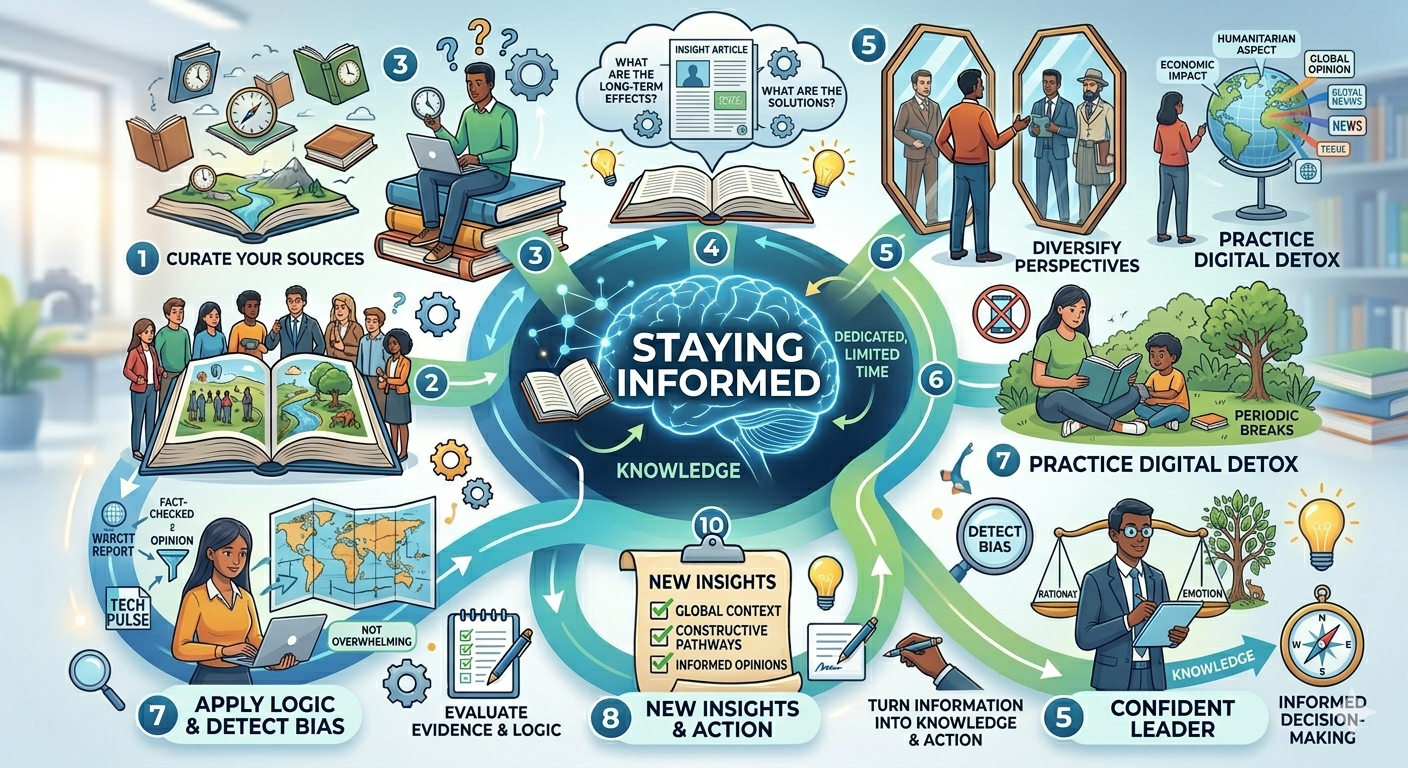
Strategies to Stay Informed Without Feeling Overwhelmed
1. Set Clear Information Boundaries
You don’t need to know everything. Decide:
- How much time you’ll spend on news daily
- Which topics matter most to you
Limiting exposure helps prevent burnout.
2. Choose Quality Over Quantity
Instead of consuming endless content, focus on a few reliable sources. Trusted platforms like
BBC News
or
Reuters
provide accurate and balanced reporting.
Fewer, high-quality sources reduce confusion and misinformation.
3. Schedule News Consumption
Avoid checking news constantly. Instead:
- Read news once or twice a day
- Avoid news before bedtime
- Start your day without immediate exposure
Creating a routine reduces stress and improves focus.
4. Avoid Doomscrolling
Doomscrolling is the habit of endlessly consuming negative news. To stop:
- Set time limits on apps
- Use website blockers
- Be mindful of your emotional state
When you notice fatigue, step away.
5. Diversify Your Information Sources
Relying on a single perspective can distort understanding. Explore different viewpoints to get a balanced picture.
This doesn’t mean consuming more—it means consuming smarter.
6. Use Technology Wisely
Digital tools can help manage information intake:
- News aggregator apps
- Email newsletters
- Curated content platforms
For example,
Google News
allows you to customize topics and sources.
7. Take Regular Digital Breaks
Your brain needs time to rest. Schedule:
- Screen-free hours
- Social media detox days
- Offline activities
This helps reset your mental state.
8. Focus on What You Can Control
Many global issues are beyond individual control. Instead of feeling helpless:
- Stay informed on relevant topics
- Take meaningful action where possible
This reduces anxiety and increases empowerment.
9. Practice Mindful Consumption
Before consuming content, ask:
- Is this useful or necessary?
- How does this make me feel?
- Am I learning or just scrolling?
Mindfulness turns passive consumption into intentional learning.
10. Balance News With Positive Content
Constant exposure to negative news can distort your worldview. Balance it with:
- Educational content
- Inspirational stories
- Personal development material
Building a Healthy Information Diet
Think of information like food. Just as a balanced diet keeps your body healthy, a balanced information intake keeps your mind sharp.
A healthy information diet includes:
- Reliable news sources
- Diverse perspectives
- Limited consumption time
- Positive and educational content
The Role of Social Media
Social media is a major source of information, but it comes with risks:
- Misinformation
- Echo chambers
- Emotional manipulation
To use it effectively:
- Follow credible accounts
- Unfollow toxic or misleading pages
- Verify information before sharing
Recognizing Misinformation
In the digital age, misinformation spreads quickly. To identify it:
- Check the source
- Look for evidence
- Cross-verify with trusted outlets
Fact-checking websites like
Snopes
can help verify claims.
The Impact of News on Mental Health
Excessive news consumption can negatively affect mental health, leading to:
- Anxiety
- Stress
- Sleep disturbances
highlight the connection between media exposure and stress levels.
Reducing exposure and setting boundaries can significantly improve well-being.
Long-Term Benefits of Balanced Information Consumption
When you manage information effectively, you experience:
- Better focus
- Improved decision-making
- Reduced stress
- Greater clarity
- Enhanced learning
FAQs
How can I stay informed without feeling anxious?
Limit news consumption, choose reliable sources, and avoid constant exposure to negative content.
How much news should I consume daily?
There’s no fixed rule, but 30–60 minutes of focused consumption is generally sufficient.
What is doomscrolling?
It’s the habit of continuously consuming negative news, often leading to stress and anxiety.
Are social media platforms reliable for news?
They can be, but information should always be verified through trusted sources.
How do I avoid misinformation?
Check sources, verify facts, and use fact-checking websites.
Can taking breaks from news make me uninformed?
No. Strategic breaks help you stay informed more effectively without burnout.
What are the best sources for reliable news?
Reputable outlets like BBC, Reuters, and established research organizations.
How does information overload affect the brain?
It reduces focus, increases stress, and makes decision-making harder.
Should I completely avoid negative news?
No, but balance it with positive and constructive content.
How can I build a healthy information habit?
Set boundaries, consume intentionally, and focus on quality over quantity.
Conclusion
Staying informed in the modern world is both a necessity and a challenge. While the constant flow of information can feel overwhelming, it is possible to strike a balance between awareness and well-being.
By setting boundaries, choosing reliable sources, practicing mindful consumption, and taking regular breaks, you can stay informed without sacrificing your mental health.
Remember, being informed is not about knowing everything—it’s about knowing what truly matters. When you approach information with intention and awareness, you gain not only knowledge but also clarity, confidence, and peace of mind.