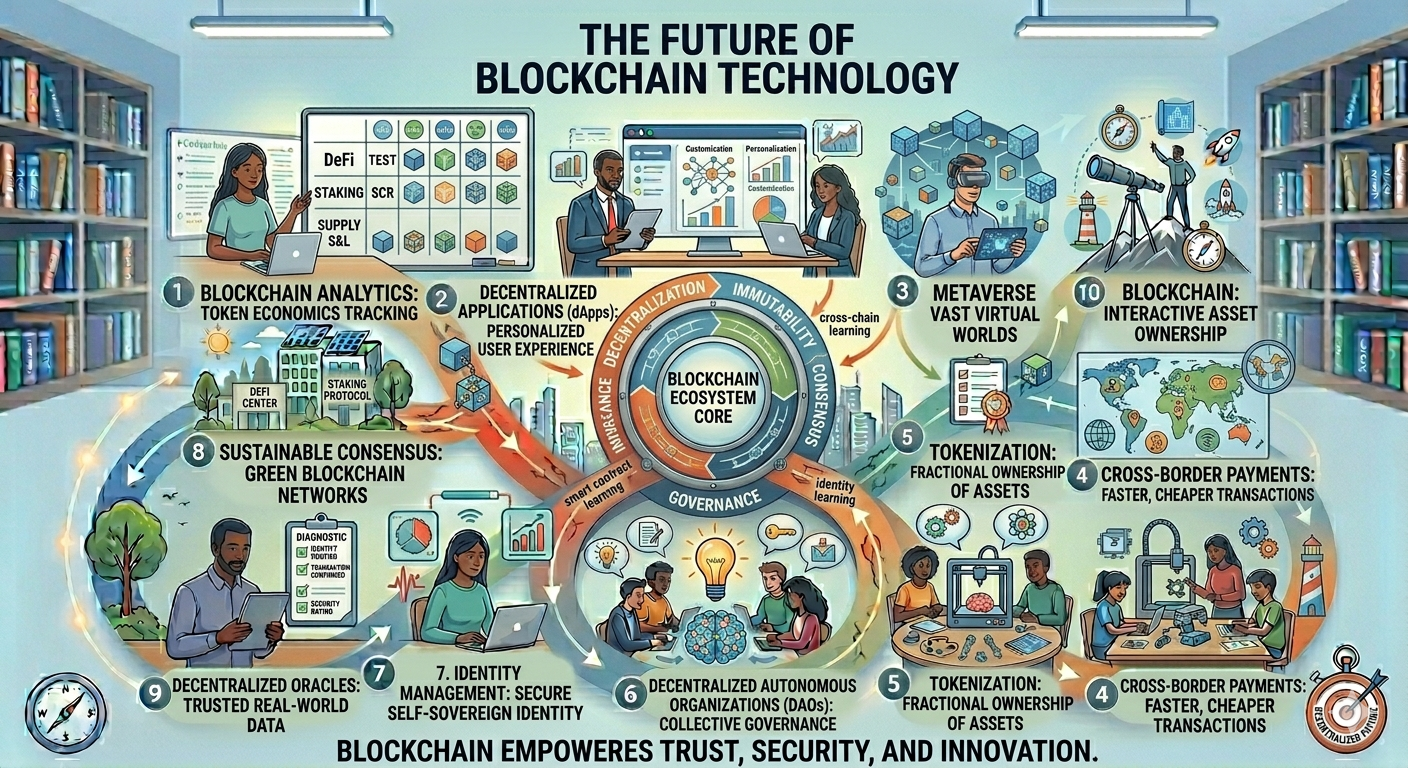
Blockchain technology has rapidly evolved from a niche innovation powering cryptocurrencies into a transformative force with the potential to reshape industries, economies, and digital interactions. Originally introduced as the underlying system for Bitcoin, blockchain is now being explored across sectors such as finance, healthcare, supply chain, governance, and beyond.
As we move further into a digital-first world, the future of blockchain technology is becoming increasingly significant. This article explores how blockchain works, its current applications, emerging trends, challenges, and the transformative role it is expected to play in the years ahead.
What Is Blockchain Technology?
Blockchain is a decentralized digital ledger that records transactions across multiple computers in a secure and transparent way. Each transaction is grouped into a block, which is then linked to the previous block, forming a chain.
Key characteristics include:
- Decentralization
- Transparency
- Security through cryptography
- Immutability
These features make blockchain highly reliable and resistant to fraud or tampering.
The Evolution of Blockchain
Blockchain technology has gone through several phases:
Blockchain 1.0: Cryptocurrency
Focused on digital currencies like Bitcoin.
Blockchain 2.0: Smart Contracts
Platforms like Ethereum introduced programmable contracts that execute automatically.
Blockchain 3.0: Beyond Finance
Applications expanded into healthcare, logistics, voting systems, and more.
Blockchain 4.0: Integration with Emerging Technologies
The current phase involves integration with AI, IoT, and big data.
Why Blockchain Matters for the Future
Blockchain addresses several challenges in traditional systems:
- Lack of transparency
- Centralized control
- Security vulnerabilities
- Inefficiencies in processes
Its decentralized nature allows for trustless systems, where transactions can occur without intermediaries.
Key Trends Shaping the Future of Blockchain
1. Decentralized Finance (DeFi)
DeFi is one of the most significant blockchain innovations.
It enables financial services such as:
- Lending
- Borrowing
- Trading
without traditional banks.
DeFi platforms operate using smart contracts, reducing costs and increasing accessibility.
2. Central Bank Digital Currencies (CBDCs)
Governments are exploring digital currencies backed by central banks.
CBDCs aim to:
- Improve payment efficiency
- Enhance financial inclusion
- Reduce reliance on cash
Countries worldwide are actively researching or piloting CBDCs.
3. Integration with Artificial Intelligence
Blockchain and AI together create powerful systems.
- AI analyzes data
- Blockchain ensures data integrity
This combination enhances decision-making and automation.
4. Supply Chain Transparency
Blockchain improves supply chain management by providing:
- Real-time tracking
- Verified data
- Reduced fraud
Companies can track products from origin to destination.
5. Non-Fungible Tokens (NFTs)
NFTs represent unique digital assets.
They are used in:
- Art
- Gaming
- Entertainment
NFTs have created new opportunities for creators and businesses.
6. Blockchain in Healthcare
Blockchain enhances healthcare by:
- Securing patient data
- Improving data sharing
- Reducing fraud
It ensures privacy and accuracy in medical records.
7. Digital Identity Solutions
Blockchain enables secure and decentralized identity systems.
Benefits include:
- Reduced identity theft
- Greater privacy
- User control over data
8. Smart Cities and IoT Integration
Blockchain supports smart cities by managing data from IoT devices securely.
Applications include:
- Energy management
- Traffic systems
- Public services
Benefits of Blockchain Technology
Transparency
All transactions are recorded and visible, increasing trust.
Security
Cryptographic techniques protect data from unauthorized access.
Efficiency
Automation reduces time and costs.
Decentralization
Eliminates the need for intermediaries.
Challenges Facing Blockchain
Despite its potential, blockchain faces several challenges:
Scalability
Handling large volumes of transactions efficiently remains a challenge.
Regulatory Uncertainty
Governments are still developing regulations.
Energy Consumption
Some blockchain systems consume significant energy.
Adoption Barriers
Limited understanding and infrastructure hinder widespread adoption.
Blockchain and Global Economies
Blockchain is expected to have a significant economic impact.
It can:
- Reduce transaction costs
- Increase efficiency
- Enable new business models
Reports suggest blockchain could add trillions of dollars to the global economy in the coming years.
The Role of Governments and Regulations
Governments play a crucial role in shaping blockchain’s future.
They must:
- Develop clear regulations
- Encourage innovation
- Ensure security and compliance
Balanced regulation is key to growth.
Blockchain in Different Industries
Finance
Revolutionizing payments, banking, and investments.
Healthcare
Improving data management and patient care.
Supply Chain
Enhancing transparency and efficiency.
Education
Verifying credentials and certifications.
Real Estate
Simplifying property transactions.
The Future of Decentralization
Decentralization is at the core of blockchain’s vision.
It empowers individuals by:
- Giving control over data
- Reducing reliance on central authorities
- Promoting transparency
The Role of Innovation
Continuous innovation is driving blockchain forward.
Key areas include:
- Layer 2 scaling solutions
- Interoperability between blockchains
- Energy-efficient consensus mechanisms
Long-Term Outlook
The future of blockchain technology is promising but uncertain.
Success depends on:
- Technological advancements
- Regulatory frameworks
- Public adoption
Blockchain is likely to become a foundational technology in the digital economy.
Resources for Learning Blockchain
If you want to explore blockchain further:
These platforms provide insights, tools, and updates.
FAQs
What is blockchain technology?
A decentralized digital ledger that records transactions securely.
Why is blockchain important?
It improves transparency, security, and efficiency.
What is the future of blockchain?
It includes widespread adoption across industries and integration with emerging technologies.
What are smart contracts?
Self-executing contracts with terms written in code.
What is DeFi?
Decentralized finance that operates without traditional banks.
Are cryptocurrencies the only use of blockchain?
No, blockchain has many applications beyond cryptocurrencies.
What are NFTs?
Unique digital assets stored on blockchain.
What challenges does blockchain face?
Scalability, regulation, and energy consumption.
How can I learn blockchain?
Through online courses, tutorials, and official resources.
Will blockchain replace traditional systems?
It may transform them, but not completely replace all systems.
Conclusion
The future of blockchain technology is filled with immense potential and transformative possibilities. From revolutionizing finance and healthcare to enabling decentralized systems and digital ownership, blockchain is reshaping how we interact with technology and trust systems.
While challenges remain, ongoing innovation and growing adoption suggest that blockchain will play a central role in the future digital landscape. As industries continue to explore its capabilities, blockchain is likely to become a cornerstone of modern economies and technological advancement.
Understanding and adapting to this technology will be crucial for individuals and organizations aiming to thrive in the years ahead.