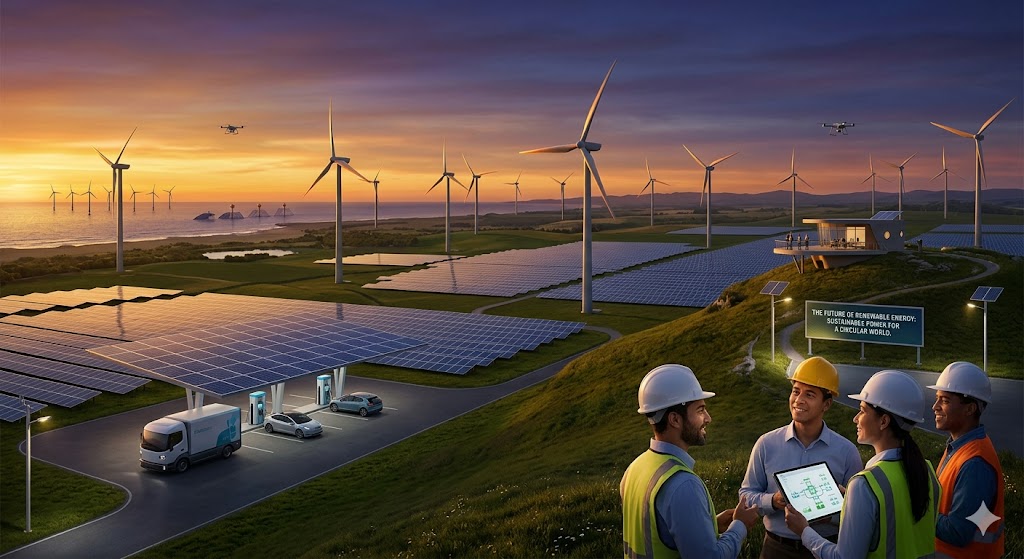
As the world faces growing environmental challenges, rising energy demands, and the urgent need to reduce carbon emissions, renewable energy has emerged as one of the most critical solutions for a sustainable future. From solar and wind to hydropower and emerging technologies, renewable energy is transforming how we generate, distribute, and consume power.
The future of renewable energy is not just about replacing fossil fuels—it is about reimagining the global energy system to be cleaner, smarter, and more resilient. This article explores the trends, innovations, challenges, and opportunities shaping the future of renewable energy.
What Is Renewable Energy?
Renewable energy comes from natural sources that are replenished over time. Unlike fossil fuels, these sources do not run out and have a significantly lower environmental impact.
Common types of renewable energy include:
- Solar energy
- Wind energy
- Hydropower
- Geothermal energy
- Biomass enery
Why Renewable Energy Matters
The importance of renewable energy lies in its ability to address key global challenges:
- Climate change
- Air pollution
- Energy security
- Resource depletion
By reducing dependence on fossil fuels, renewable energy helps create a cleaner and more sustainable environment.
Current State of Renewable Energy
Renewable energy has seen rapid growth in recent years.
Key developments include:
- Increased investment in solar and wind
- Falling costs of renewable technologies
- Government policies supporting clean energy
Key Trends Shaping the Future
1. Expansion of Solar Energy
Solar power is one of the fastest-growing energy sources.
Advancements include:
- More efficient solar panels
- Lower installation costs
- Increased adoption in residential and commercial sectors
2. Growth of Wind Energy
Wind energy continues to expand, especially offshore wind farms.
Benefits include:
- High energy output
- Reduced environmental impact
3. Energy Storage Innovations
Energy storage is critical for renewable energy.
Technologies such as batteries help:
- Store excess energy
- Provide power during low production periods
4. Smart Grids and Digitalization
Smart grids use technology to manage energy efficiently.
They enable:
- Real-time monitoring
- Better energy distribution
- Integration of renewable sources
5. Decentralized Energy Systems
Energy production is shifting from centralized systems to distributed networks.
Examples include:
- Rooftop solar panels
- Community energy projects
6. Green Hydrogen
Hydrogen produced using renewable energy is emerging as a clean fuel.
It has potential in:
- Transportation
- Industry
- Energy storage
7. Electrification of Transportation
Electric vehicles (EVs) are becoming more common.
They reduce reliance on fossil fuels and integrate with renewable energy systems.
Benefits of Renewable Energy
Environmental Benefits
- Reduced greenhouse gas emissions
- Lower air pollution
- Conservation of natural resources
Economic Benefits
- Job creation
- Lower energy costs
- Economic growth
Social Benefits
- Improved public health
- Energy access in remote areas
Challenges Facing Renewable Energy
Intermittency
Renewable sources like solar and wind depend on weather conditions.
Infrastructure Limitations
Existing energy systems need upgrades to support renewables.
High Initial Costs
Although costs are decreasing, initial investments can be high.
Policy and Regulation
Inconsistent policies can slow adoption.
Land and Resource Use
Large-scale projects require significant space.
The Role of Governments and Policies
Government support is crucial for renewable energy growth.
Policies include:
- Subsidies and incentives
- Renewable energy targets
- Carbon pricing
Strong policies encourage investment and innovation.
Technological Innovations
Innovation is driving the future of renewable energy.
Key areas include:
- Advanced solar technologies
- Efficient wind turbines
- Improved battery storage
- AI and data analytics
These advancements improve efficiency and reduce costs.
Renewable Energy and Global Economies
Renewable energy is reshaping economies.
It creates:
- New industries
- Job opportunities
- Investment growth
Countries investing in renewables are gaining competitive advantages.
The Role of Individuals and Businesses
Everyone can contribute to renewable energy adoption.
Individuals can:
- Use energy-efficient appliances
- Install solar panels
- Reduce energy consumption
Businesses can:
- Invest in renewable energy
- Adopt sustainable practices
- Reduce carbon footprints
Future Outlook
The future of renewable energy is promising.
Key expectations include:
- Increased adoption worldwide
- Continued cost reductions
- Technological breakthroughs
- Greater integration with digital systems
Renewable energy is expected to dominate the global energy mix in the coming decade
FAQs
What is renewable energy?
Energy from natural sources that are replenished over time.
Why is renewable energy important?
It reduces environmental impact and supports sustainability.
What are the main types of renewable energy?
Solar, wind, hydropower, geothermal, and biomass.
What challenges does renewable energy face?
Intermittency, infrastructure, and policy issues.
Is renewable energy cheaper than fossil fuels?
In many cases, yes.
What is green hydrogen?
Hydrogen produced using renewable energy.
How does energy storage help renewables?
It stores excess energy for later use.
Can individuals use renewable energy?
Yes, through solar panels and energy-efficient practices.
What is the future of renewable energy?
Increased adoption and technological advancement.
How can I learn more?
Through online resources and research organizations.
Conclusion
The future of renewable energy represents a critical shift toward a more sustainable and resilient world. As technology advances and adoption increases, renewable energy is set to play a central role in addressing global challenges such as climate change and energy security.
While challenges remain, the progress made so far demonstrates the potential of renewable energy to transform economies, improve lives, and protect the environment. By embracing innovation and collaboration, governments, businesses, and individuals can accelerate the transition to a cleaner energy future.
Renewable energy is not just an option—it is the path forward for a sustainable world.