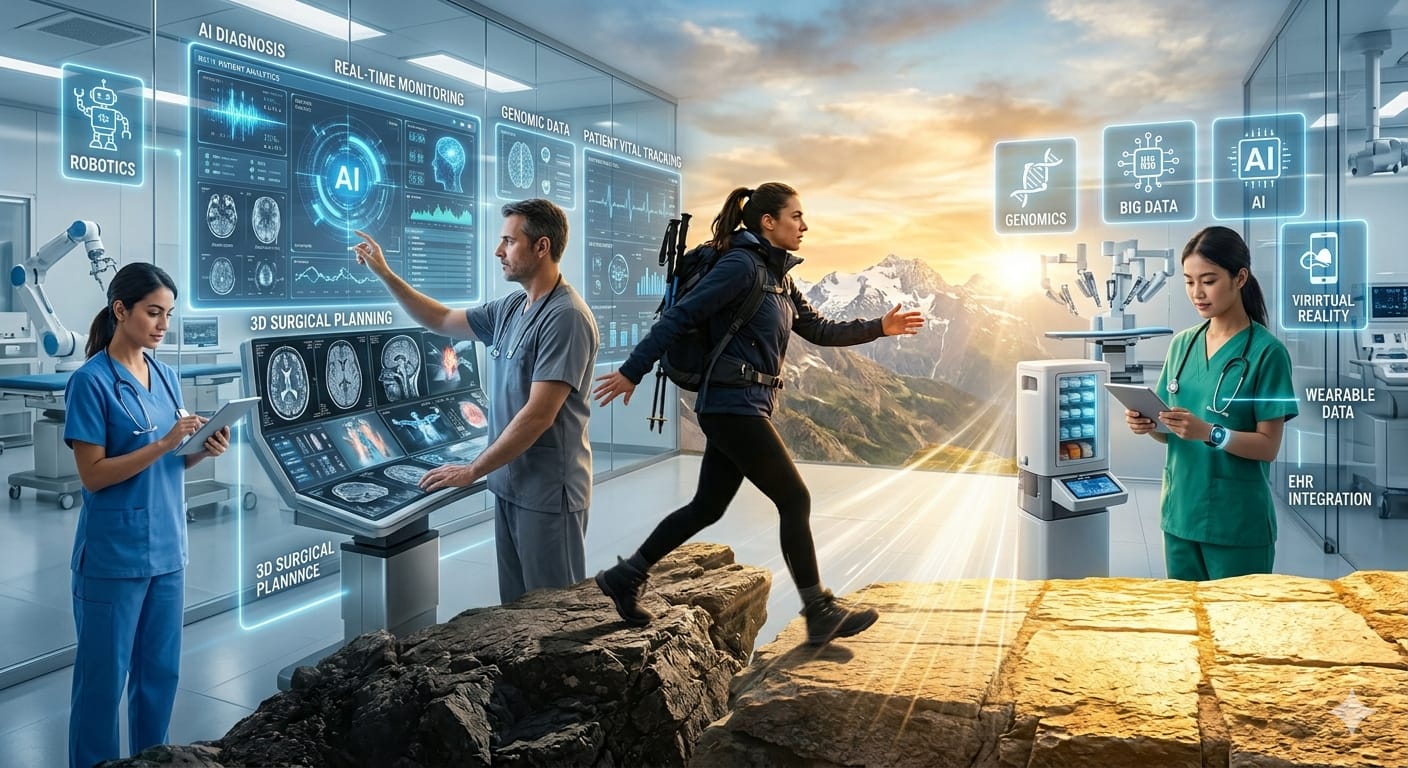
Technology has revolutionized nearly every aspect of modern life, and healthcare is no exception. From advanced diagnostic tools to telemedicine and artificial intelligence, technology is transforming how healthcare is delivered, improving patient outcomes, and making medical services more accessible and efficient.
The role of technology in healthcare goes beyond convenience—it is reshaping the entire healthcare ecosystem. This includes how diseases are diagnosed, treated, monitored, and prevented. In this article, we explore the impact, benefits, challenges, and future of technology in healthcare.
Understanding Healthcare Technology
Healthcare technology refers to the use of tools, systems, and innovations to improve medical services. It includes:
- Medical devices
- Software applications
- Digital platforms
- Data systems
Evolution of Technology in Healthcare
Healthcare has evolved significantly over the years.
Key developments include:
- Introduction of medical imaging
- Digital record-keeping
- Advanced surgical techniques
- Telemedicine services
These advancements have improved accuracy, efficiency, and accessibility.
Key Areas Where Technology Impacts Healthcare
1. Electronic Health Records (EHRs)
EHRs store patient information digitally.
Benefits include:
- Easy access to data
- Improved coordination among healthcare providers
- Reduced errors
2. Telemedicine
Telemedicine allows remote consultations between patients and doctors.
Advantages:
- Increased accessibility
- Reduced travel time
- Convenience for patients
Platforms like
Teladoc Health
offer virtual healthcare services.
3. Artificial Intelligence (AI)
AI is transforming healthcare by:
- Analyzing medical data
- Assisting in diagnosis
- Predicting diseases
AI improves accuracy and efficiency.
4. Wearable Devices
Devices such as fitness trackers monitor health in real-time.
They track:
- Heart rate
- Activity levels
- Sleep patterns
5. Robotics
Robotics is used in surgery and rehabilitation.
Benefits include:
- Precision
- Reduced recovery time
- Minimally invasive procedures
6. Medical Imaging
Advanced imaging technologies improve diagnosis.
Examples:
- MRI
- CT scans
- Ultrasound
Benefits of Technology in Healthcare
Improved Patient Care
Technology enhances diagnosis and treatment.
Increased Efficiency
Automation reduces administrative tasks.
Better Access to Healthcare
Telemedicine and digital tools expand reach.
Cost Reduction
Efficient systems lower healthcare costs.
Enhanced Data Management
Digital records improve accuracy and accessibility.
Challenges of Healthcare Technology
Data Security and Privacy
Protecting patient information is critical.
High Costs
Advanced technologies can be expensive.
Technical Issues
System failures can disrupt services.
Training Requirements
Healthcare professionals need training to use new technologies.
Ethical Concerns
AI and data usage raise ethical questions.
The Role of Big Data in Healthcare
Big data enables:
- Disease prediction
- Personalized treatment
- Improved research
It helps healthcare providers make informed decisions.
Technology and Patient Engagement
Patients are becoming more involved in their care.
Technology enables:
- Access to health information
- Communication with providers
- Self-monitoring
The Impact on Healthcare Professionals
Technology changes how professionals work.
Benefits:
- Better tools
- Improved decision-making
Challenges:
- Learning new systems
- Adapting to change
Technology in Public Health
Technology supports public health through:
- Disease tracking
- Vaccination programs
- Health education
Future Trends in Healthcare Technology
Artificial Intelligence Expansion
AI will play a larger role in diagnosis and treatment.
Personalized Medicine
Treatments tailored to individual patients.
Telehealth Growth
Remote healthcare will continue to expand.
Blockchain in Healthcare
Improves data security and transparency.
Virtual Reality (VR)
Used in training and therapy.
The Role of Governments and Policies
Governments regulate healthcare technology.
They ensure:
- Safety
- Quality
- Accessibility
Policies support innovation and adoption.
Technology and Global Healthcare Access
Technology bridges gaps in healthcare access.
It helps:
- Remote areas
- Developing countries
Digital solutions improve global health.
FAQs
What is healthcare technology?
It includes tools and systems used to improve medical services.
How does technology improve healthcare?
By enhancing diagnosis, treatment, and efficiency.
What is telemedicine?
Remote healthcare services using digital platforms.
What role does AI play?
It assists in diagnosis and data analysis.
Are wearable devices useful?
Yes, they help monitor health in real-time.
What are the challenges?
Cost, privacy, and technical issues.
How does big data help?
It improves decision-making and research.
What is the future of healthcare technology?
More AI, personalized medicine, and telehealth.
Is technology replacing doctors?
No, it supports healthcare professionals.
How can I learn more?
Through online resources and research.
Conclusion
The role of technology in healthcare is transformative and continually evolving. It has improved patient care, increased efficiency, and expanded access to medical services. While challenges remain, the benefits of healthcare technology are undeniable.
As innovation continues, technology will play an even greater role in shaping the future of healthcare. By embracing these advancements responsibly, we can create a more efficient, accessible, and patient-centered healthcare system.
Technology is not just changing healthcare—it is redefining it for a better and healthier future.