Creating a vision for your life is one of the most powerful steps you can take toward living with purpose, clarity, and direction. Without a clear vision, it’s easy to drift through life reacting to circumstances rather than intentionally shaping your future. A well-defined life vision acts as a compass, guiding your decisions, actions, and priorities.
This article explores how to create a meaningful vision for your life, why it matters, and how to turn that vision into reality.
What Is a Life Vision?
A life vision is a clear picture of what you want your future to look like. It reflects your values, goals, passions, and purpose. It is not just about career success or financial wealth—it includes all areas of life such as relationships, health, personal growth, and contribution to society.
A strong life vision answers questions like:
- What kind of life do I want to live?
- What truly matters to me?
- What impact do I want to make?
Why Having a Life Vision Is Important
Having a vision provides direction and meaning. It helps you:
- Make better decisions
- Stay focused on long-term goals
- Overcome challenges with purpose
- Avoid distractions
- Live a more fulfilling life
The Psychology Behind Vision and Goal Setting
Your brain is wired to respond to clear goals and visualized outcomes. When you create a vision:
- You activate motivation and focus
- You align your actions with your goals
- You increase confidence and clarity
Visualization techniques are often used by successful individuals to achieve their goals.
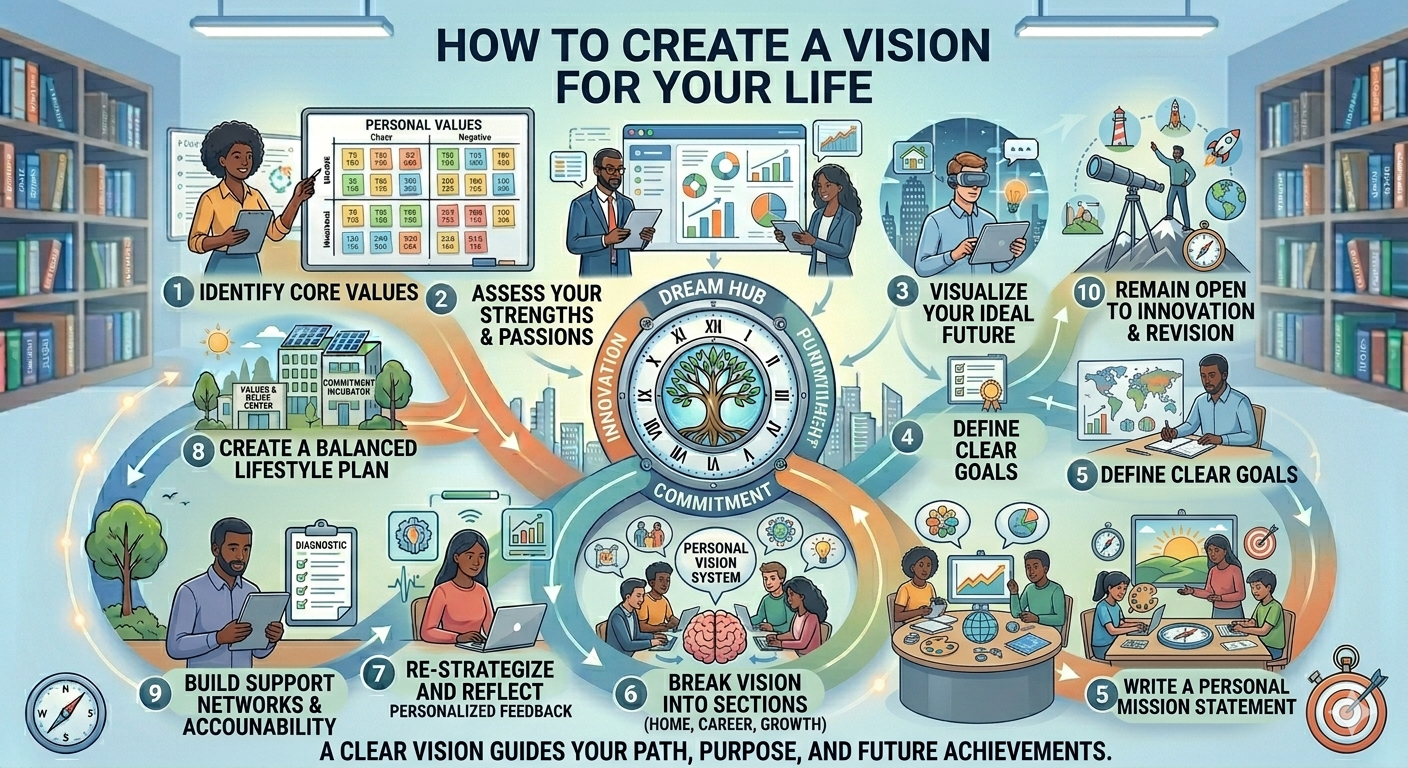
Steps to Create a Vision for Your Life
1. Reflect on Your Values
Your values are the foundation of your vision.
Ask yourself:
- What matters most to me?
- What principles guide my decisions?
Common values include:
- Integrity
- Freedom
- Growth
- Family
- Contribution
Your vision should align with your core values.
2. Identify Your Passions and Interests
Think about what excites and energizes you.
- What activities do you enjoy?
- What topics interest you?
- What would you do even without rewards?
Your passions help shape a meaningful vision.
3. Define Your Long-Term Goals
Consider where you want to be in the future.
- 5 years
- 10 years
- 20 years
Think about:
- Career
- Relationships
- Health
- Financial goals
Clear goals provide direction for your vision.
4. Visualize Your Ideal Life
Visualization is a powerful tool.
Imagine:
- Your daily routine
- Your environment
- The people around you
- Your achievements
Be as detailed as possible.
5. Write a Vision Statement
A vision statement summarizes your desired future.
It should be:
- Clear
- Inspiring
- Personal
Example:
“I aim to live a balanced life, contribute positively to society, and continuously grow personally and professionally.”
6. Break Your Vision Into Goals
A vision without action remains a dream.
Break it into:
- Short-term goals
- Medium-term goals
- Long-term goals
This makes your vision achievable.
7. Create an Action Plan
Outline steps to achieve your goals.
- What actions will you take?
- What resources do you need?
- What timeline will you follow?
Planning turns vision into reality.
8. Stay Flexible and Adapt
Life changes, and so should your vision.
- Review regularly
- Adjust when necessary
- Stay open to new opportunities
Flexibility ensures long-term success.
9. Overcome Limiting Beliefs
Self-doubt can hinder your vision.
Challenge thoughts like:
- “I’m not capable”
- “It’s too late”
Replace them with:
- “I can learn and grow”
10. Take Consistent Action
Consistency is key.
- Take small steps daily
- Stay committed
- Track progress
Action brings your vision to life.
Tools to Help You Create a Vision
Technology can support your journey.
- Vision boards
- Journaling apps
- Goal-setting tools
Platforms like
Notion
help organize goals and ideas effectively.
The Role of Habits in Achieving Your Vision
Habits determine success.
Build habits such as:
- Daily planning
- Continuous learning
- Self-reflection
Small habits lead to big results.
Common Mistakes to Avoid
- Setting unrealistic goals
- Ignoring personal values
- Lack of action
- Fear of failure
- Comparing yourself to others
Avoiding these mistakes improves success.
The Importance of Self-Discipline
Self-discipline ensures you stay on track.
- Stick to your plan
- Avoid distractions
- Maintain focus
Discipline turns intention into achievement.
Balancing Vision and Reality
While dreaming big is important, grounding your vision in reality ensures progress.
- Set achievable milestones
- Monitor progress
- Adjust expectations
The Role of Mindset
A positive mindset supports your vision.
- Stay optimistic
- Embrace challenges
- Learn from failures
Mindset influences outcomes.
Real-Life Applications
Personal Life
Improving relationships and well-being.
Career
Achieving professional growth and success.
Health
Maintaining physical and mental fitness.
Long-Term Benefits of Having a Vision
- Clarity and direction
- Increased motivation
- Better decision-making
- Greater fulfillment
- Personal growth
FAQs
What is a life vision?
A clear picture of your desired future and goals.
Why is a vision important?
It provides direction, motivation, and purpose.
How do I create a vision?
Reflect on values, set goals, and plan actions.
Can a vision change over time?
Yes, it should evolve with your experiences.
What is a vision statement?
A summary of your desired future.
How long should a vision be?
It can be short but should be clear and inspiring.
What if I don’t know my passions?
Explore new activities and reflect on interests.
How do I stay motivated?
Review your vision regularly and track progress.
Can anyone create a life vision?
Yes, it is a skill anyone can develop.
What is the difference between goals and vision?
Vision is the big picture; goals are steps to achieve it.
Conclusion
Creating a vision for your life is a powerful way to take control of your future. It provides clarity, direction, and motivation, helping you live intentionally rather than reactively.
By understanding your values, setting meaningful goals, and taking consistent action, you can turn your vision into reality. Remember, your vision is not fixed—it evolves as you grow and learn.
The most important step is to start. Define what you want, believe in your potential, and take action every day. Your future is shaped by the vision you create today.