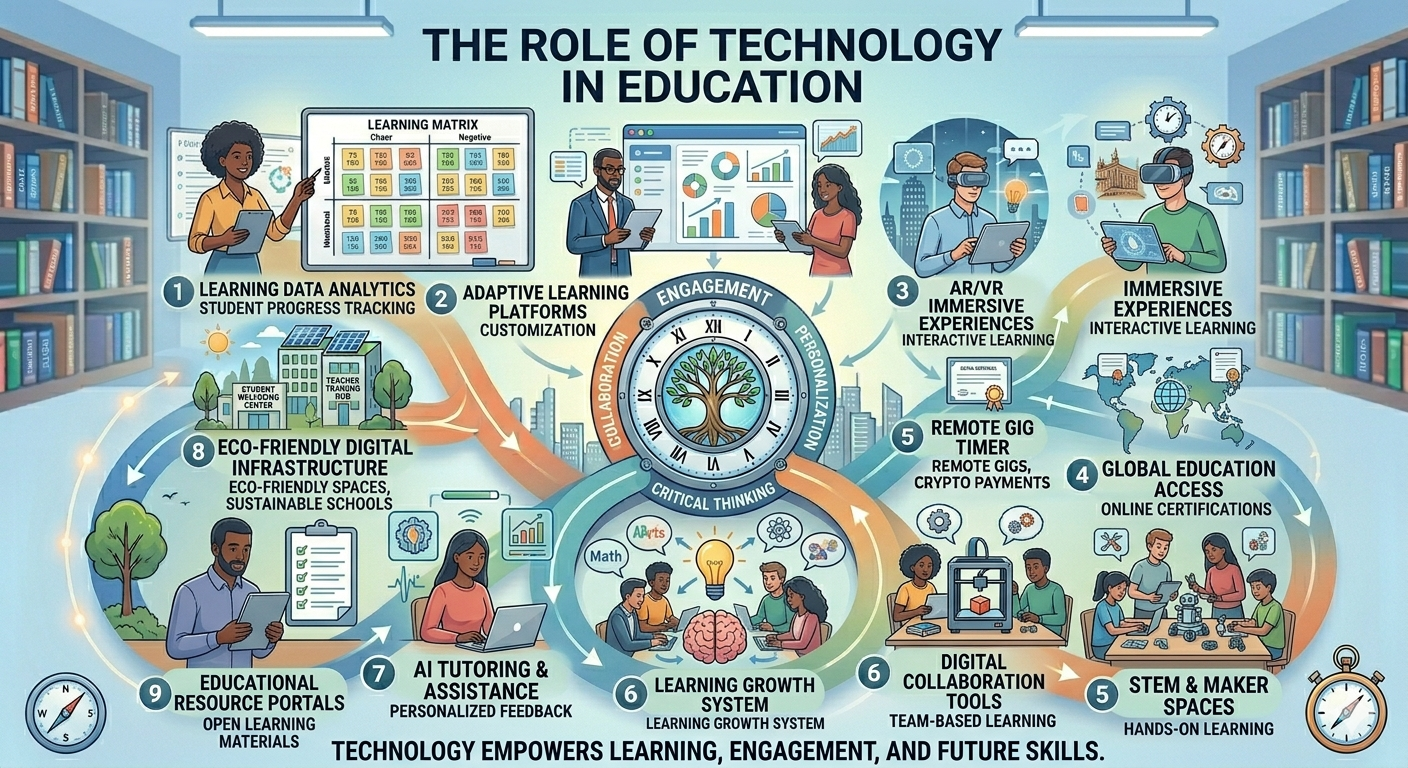
Technology has fundamentally transformed nearly every aspect of modern life, and education is no exception. From digital classrooms and online learning platforms to artificial intelligence and virtual reality, technology has reshaped how knowledge is delivered, accessed, and experienced. The role of technology in education continues to evolve, offering new opportunities for learning while also presenting challenges that educators and institutions must address.
This article explores how technology is influencing education, its benefits and drawbacks, and what the future may hold for learners and educators alike.
What Is Technology in Education?
Technology in education refers to the use of digital tools, platforms, and systems to enhance teaching and learning processes. It includes:
- Online learning platforms
- Educational apps
- Digital classrooms
- Artificial intelligence tools
- Multimedia resources
Organizations like
UNESCO
highlight the importance of technology in making education more accessible and inclusive worldwide.
The Evolution of Technology in Education
Education has undergone significant changes over time.
Traditional Learning
Focused on textbooks, lectures, and physical classrooms.
Digital Transition
Introduction of computers, projectors, and the internet.
Modern Education
Integration of AI, online platforms, and interactive tools.
Today, technology enables learning beyond physical boundaries.
Benefits of Technology in Education
1. Increased Access to Education
Technology breaks geographical barriers, allowing students to learn from anywhere.
Online platforms like
Khan Academy
provide free educational resources to millions worldwide.
2. Personalized Learning
Technology allows content to be tailored to individual learning styles and pace.
Adaptive learning systems adjust difficulty based on performance.
3. Improved Engagement
Interactive tools such as videos, simulations, and gamified learning make education more engaging.
4. Flexibility and Convenience
Students can learn anytime, anywhere, making education more accessible for working professionals and remote learners.
5. Enhanced Collaboration
Digital tools enable collaboration through:
- Online discussions
- Group projects
- Shared resources
6. Access to Vast Information
The internet provides access to a wealth of knowledge and research materials.
Platforms like
Google Scholar
allow students to explore academic research easily.
Technology in the Classroom
Modern classrooms are increasingly digital.
Smart Boards and Digital Tools
Teachers use interactive boards and multimedia presentations.
Learning Management Systems (LMS)
Platforms like
Moodle
help manage courses, assignments, and communication.
Online Assessments
Digital tools allow instant feedback and performance tracking.
The Role of Artificial Intelligence in Education
AI is transforming education in several ways:
Personalized Learning
AI analyzes student performance and customizes learning paths.
Automated Grading
Reduces teachers’ workload and provides quick feedback.
Intelligent Tutoring Systems
Provide real-time assistance to students.
Research from
IBM AI Education
shows how AI is enhancing learning experiences.
Online Learning and E-Learning Platforms
Online education has become a major component of modern learning.
Platforms such as:
offer courses from top universities and institutions.
Benefits include:
- Flexibility
- Wide course selection
- Affordable education
Technology and Student Engagement
Technology enhances engagement by making learning interactive.
Examples include:
- Educational games
- Virtual labs
- Multimedia content
Engaged students are more likely to retain information and perform better.
Challenges of Technology in Education
Despite its benefits, technology also presents challenges.
1. Digital Divide
Not all students have equal access to technology, creating inequality.
2. Distractions
Devices can lead to distractions such as social media and gaming.
3. Overreliance on Technology
Excessive dependence may reduce critical thinking and problem-solving skills.
4. Privacy and Security Concerns
Data collection raises concerns about student privacy.
5. Teacher Training
Educators need proper training to effectively use technology.
Technology in Higher Education
Universities are increasingly adopting technology for:
- Online courses
- Virtual classrooms
- Research and collaboration
This enhances accessibility and innovation in higher education.
The Role of Technology in Skill Development
Technology supports the development of essential skills such as:
- Digital literacy
- Critical thinking
- Problem-solving
- Collaboration
These skills are crucial in the modern workforce.
The Future of Technology in Education
The future of education will be shaped by emerging technologies.
Virtual Reality (VR) and Augmented Reality (AR)
Provide immersive learning experiences.
Artificial Intelligence
Continues to personalize and optimize education.
Blockchain
May be used for secure credential verification.
Global Learning Networks
Connecting students worldwide.
Balancing Technology and Traditional Learning
While technology enhances education, it should complement—not replace—traditional methods.
A balanced approach includes:
- Human interaction
- Critical thinking
- Practical experiences
The Role of Teachers in a Digital Age
Teachers remain essential in guiding and mentoring students.
Technology supports teachers but does not replace their role.
Educators provide:
- Emotional support
- Guidance
- Critical thinking development
Benefits for Educators
Technology helps teachers by:
- Automating administrative tasks
- Providing teaching resources
- Enhancing communication with students
FAQs
What is the role of technology in education?
It enhances learning through digital tools, platforms, and resources.
How does technology improve learning?
By making education more accessible, engaging, and personalized.
What are the disadvantages of technology in education?
Digital divide, distractions, and privacy concerns.
Can technology replace teachers?
No, teachers are essential for guidance and human interaction.
What is e-learning?
Learning conducted through digital platforms and online courses.
How does AI help in education?
It personalizes learning and automates tasks like grading.
Is online learning effective?
Yes, when used properly, it can be highly effective.
What skills does technology develop?
Digital literacy, critical thinking, and collaboration.
How can students avoid distractions?
By setting limits and focusing on educational use.
What is the future of education technology?
It includes AI, VR, and global digital learning systems.
Conclusion
The role of technology in education is transformative and continuously evolving. It has made learning more accessible, flexible, and engaging, opening new possibilities for students and educators alike.
However, technology also brings challenges that must be addressed to ensure equitable and effective education. By balancing innovation with traditional teaching methods, and by using technology responsibly, we can create a more inclusive and dynamic educational environment.
Ultimately, technology is a powerful tool—but its true impact depends on how it is used. When applied thoughtfully, it has the potential to revolutionize education and empower learners around the world.