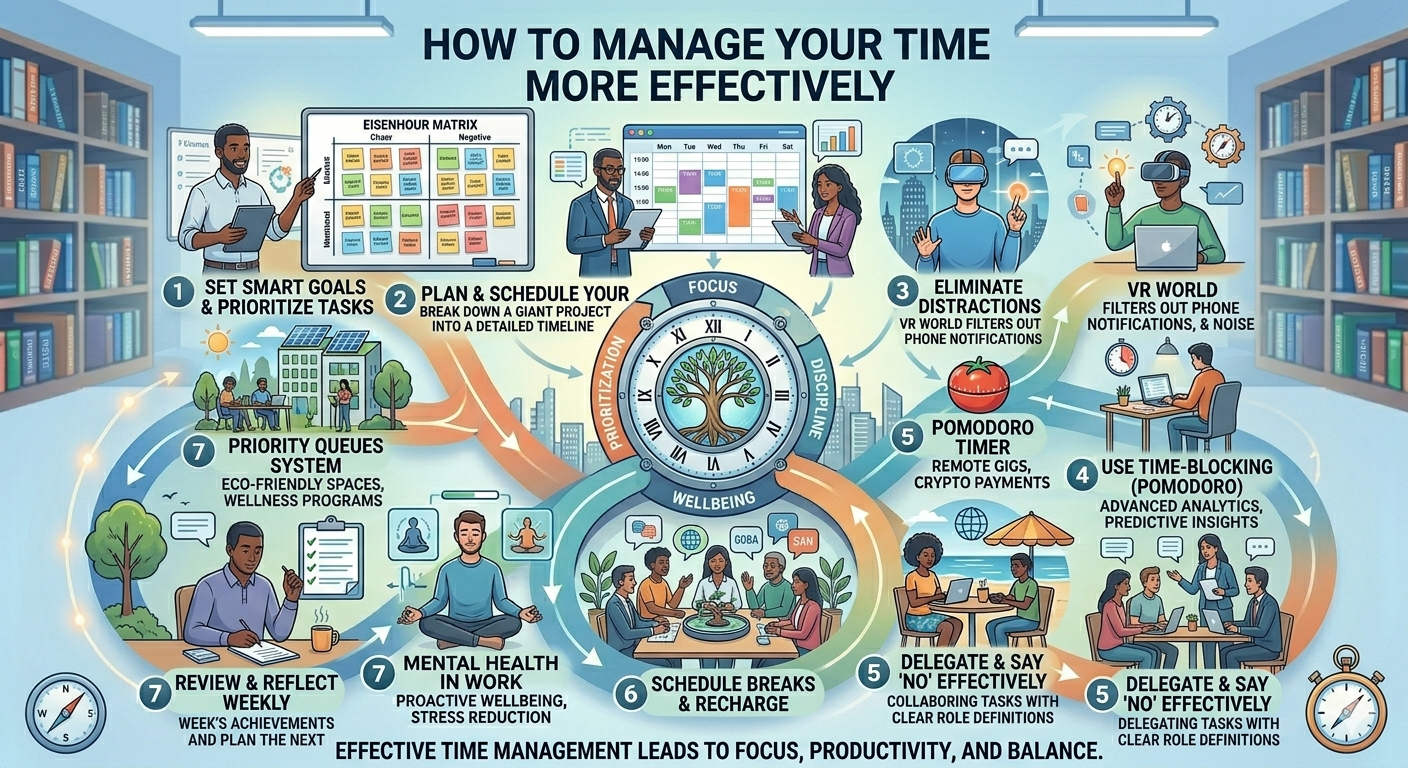
Time is one of the most valuable resources we have, yet it is also one of the easiest to waste. In today’s fast-paced world, filled with distractions, deadlines, and responsibilities, effective time management is no longer optional—it is essential. Whether you are a student, professional, entrepreneur, or homemaker, learning how to manage your time effectively can significantly improve productivity, reduce stress, and enhance overall quality of life.
This article explores proven strategies, psychological insights, and practical tools to help you take control of your time and make the most of every day.
What Is Time Management?
Time management is the process of planning and organizing how you divide your time between different activities. It involves prioritizing tasks, setting goals, and using your time efficiently to achieve desired outcomes.
Good time management allows you to:
- Work smarter, not harder
- Complete tasks more efficiently
- Reduce stress and overwhelm
- Create balance between work and personal life
Why Time Management Is Important
Effective time management impacts every area of life.
It helps you:
- Meet deadlines consistently
- Improve productivity
- Maintain focus and discipline
- Achieve long-term goals
- Reduce anxiety and burnout
According to
Harvard Business Review
effective time management is closely linked to higher performance and better decision-making.
Common Time Management Challenges
Before improving time management, it’s important to recognize common obstacles:
- Procrastination
- Lack of clear goals
- Poor prioritization
- Distractions (especially digital)
- Overcommitment
Identifying these challenges helps you address them effectively.
The Psychology of Time Management
Time management is not just about schedules—it’s about behavior and mindset.
Key psychological factors include:
Procrastination
Often caused by fear, perfectionism, or lack of motivation.
Decision Fatigue
Too many choices can reduce productivity and focus.
Instant Gratification
Short-term rewards (like social media) often distract from long-term goals.
Understanding these factors helps you develop better habits.
Proven Strategies to Manage Time Effectively
1. Set Clear Goals
Start with defining what you want to achieve.
Use the SMART framework:
- Specific
- Measurable
- Achievable
- Relevant
- Time-bound
Clear goals provide direction and motivation.
2. Prioritize Tasks
Not all tasks are equally important. Use the Eisenhower Matrix to categorize tasks:
- Urgent and important
- Important but not urgent
- Urgent but not important
- Neither urgent nor important
Focus on what truly matters.
3. Plan Your Day in Advance
Planning ahead reduces decision-making stress.
- Create a to-do list
- Schedule tasks
- Allocate time blocks
This improves efficiency and focus.
4. Use Time Blocking
Time blocking involves dedicating specific time slots to tasks.
Benefits include:
- Better focus
- Reduced multitasking
- Increased productivity
5. Avoid Multitasking
Multitasking reduces efficiency and increases errors.
Focus on one task at a time for better results.
6. Eliminate Distractions
Common distractions include:
- Social media
- Notifications
- Unnecessary meetings
Limit distractions by:
- Turning off notifications
- Using focus apps
- Creating a dedicated workspace
7. Apply the Pomodoro Technique
Work in focused intervals (e.g., 25 minutes), followed by short breaks.
This improves concentration and prevents burnout.
8. Learn to Say No
Overcommitting leads to stress and poor performance.
Politely decline tasks that do not align with your priorities.
9. Delegate Tasks
You don’t have to do everything yourself.
Delegate tasks when possible to save time and energy.
10. Review and Reflect
At the end of each day:
- Review what you accomplished
- Identify areas for improvement
- Adjust your plan
Reflection helps refine your approach.
Tools for Effective Time Management
Technology can support better time management.
Useful tools include:
- Digital calendars
- Task management apps
- Focus timers
Platforms like
Google Calendar
help organize schedules effectively.
Building Productive Habits
Time management is closely tied to habits.
Develop habits such as:
- Starting your day early
- Planning tasks daily
- Maintaining consistency
Small habits lead to big results over time.
Time Management for Students
Students can improve performance by:
- Creating study schedules
- Breaking tasks into smaller steps
- Avoiding last-minute cramming
Consistency is key to academic success.
Time Management in the Workplace
Professionals can enhance productivity by:
- Prioritizing tasks
- Minimizing distractions
- Using productivity tools
Effective time management leads to better performance and career growth.
The Role of Discipline and Consistency
Discipline ensures you stick to your plans, while consistency builds long-term success.
Without these, even the best strategies fail.
Balancing Work and Life
Time management is not just about work—it’s about balance.
Make time for:
- Family and relationships
- Health and fitness
- Relaxation and hobbies
Balance prevents burnout and improves well-being.
Overcoming Procrastination
To overcome procrastination:
- Break tasks into smaller steps
- Start with simple tasks
- Set deadlines
- Reward progress
Taking action is the key.
The Importance of Rest and Breaks
Working continuously reduces productivity.
Take regular breaks to:
- Recharge energy
- Improve focus
- Prevent burnout
Rest is an essential part of productivity.
Long-Term Benefits of Effective Time Management
- Increased productivity
- Reduced stress
- Better decision-making
- Improved work-life balance
- Greater success and satisfaction
FAQs
What is time management?
It is the process of planning and organizing how you use your time effectively.
Why is time management important?
It improves productivity, reduces stress, and helps achieve goals.
How can I improve my time management skills?
Set goals, prioritize tasks, and eliminate distractions.
What is the Pomodoro Technique?
A method of working in focused intervals with short breaks.
How do I stop procrastinating?
Break tasks into smaller steps and start immediately.
What tools can help with time management?
Digital calendars, task apps, and scheduling tools.
How does time management reduce stress?
It provides structure and prevents last-minute pressure.
Can time management improve productivity?
Yes, it helps you focus on important tasks and use time efficiently.
What is time blocking?
Allocating specific time slots for tasks.
How can I balance work and personal life?
By planning your time and setting boundaries.
Conclusion
Managing your time effectively is one of the most valuable skills you can develop. It empowers you to take control of your schedule, achieve your goals, and create a balanced, fulfilling life.
By setting clear priorities, using proven techniques, and building consistent habits, you can transform how you use your time. Remember, time management is not about doing more—it’s about doing what matters most.
Start small, stay consistent, and gradually refine your approach. Over time, you will not only become more productive but also experience greater clarity, confidence, and peace of mind.