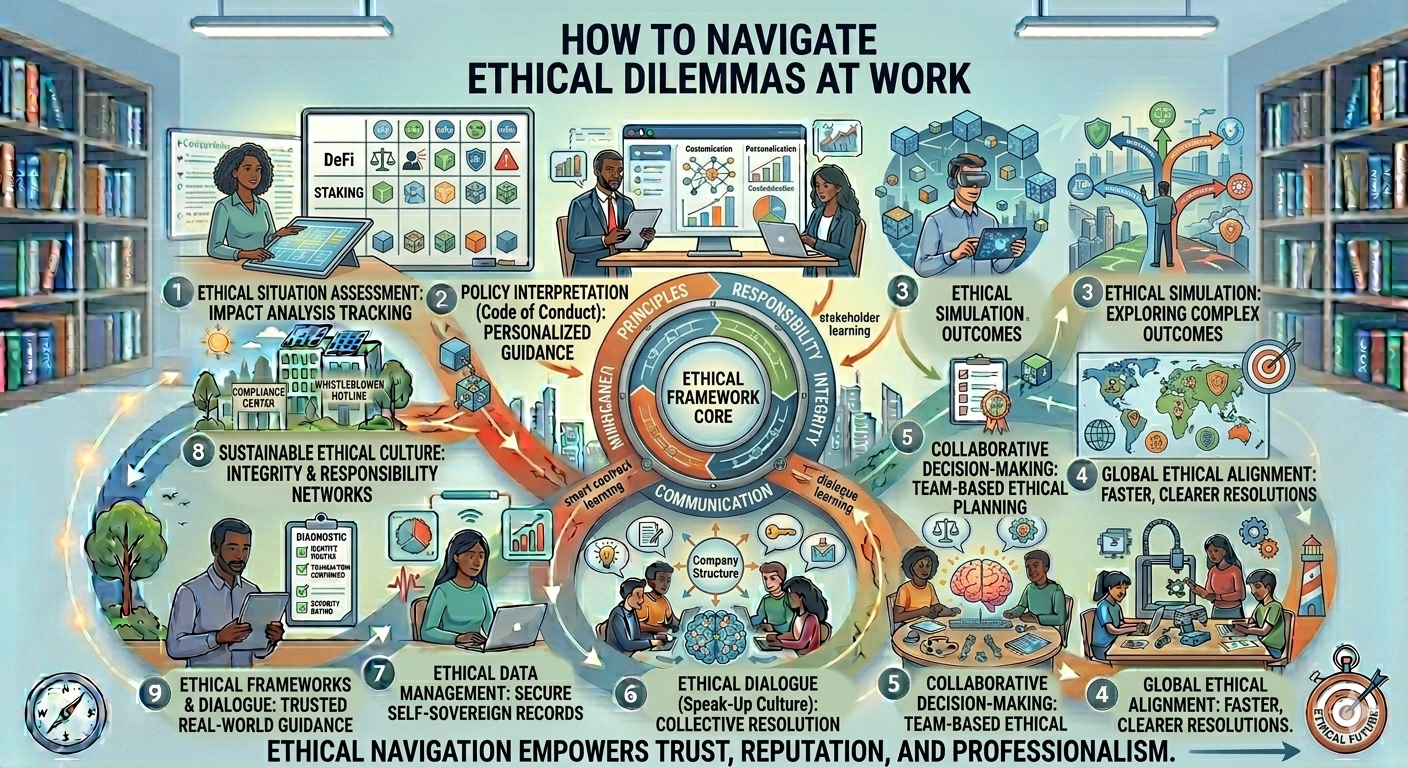
In today’s complex and fast-paced professional environment, employees and leaders frequently encounter situations where the right course of action is not always clear. These situations, known as ethical dilemmas, challenge individuals to make decisions that balance personal values, organizational policies, and broader societal expectations.
Navigating ethical dilemmas at work requires more than just knowing the rules—it demands critical thinking, emotional intelligence, integrity, and the courage to act responsibly. This article explores how to recognize ethical dilemmas, analyze them effectively, and make decisions that align with both professional standards and personal values.
What Is an Ethical Dilemma?
An ethical dilemma occurs when a person must choose between two or more conflicting options, each with moral implications. Often, there is no perfect solution, and each choice may involve some compromise.
Examples include:
- Reporting misconduct versus protecting a colleague
- Balancing company loyalty with honesty
- Deciding between profit and social responsibity
Why Ethical Decision-Making Matters
Ethical behavior is essential for building trust, maintaining a positive workplace culture, and ensuring long-term success.
Strong ethical decision-making:
- Builds credibility and trust
- Prevents legal issues
- Enhances organizational reputation
- Promotes fairness and respect
Common Types of Ethical Dilemmas at Work
1. Conflicts of Interest
Situations where personal interests conflict with professional responsibilities.
Example:
- Favoring a friend in hiring decisions
2. Workplace Harassment and Discrimination
Deciding how to respond to inappropriate behavior.
3. Data Privacy and Confidentiality
Handling sensitive information responsibly.
4. Financial Integrity
Issues involving fraud, misreporting, or misuse of funds.
5. Whistleblowing
Reporting unethical practices within an organization.
Each of these situations requires careful judgment and ethical reasoning.
The Psychology Behind Ethical Decision-Making
Ethical decisions are influenced by:
- Personal values
- Organizational culture
- Social pressures
- Emotional responses
Understanding these influences helps individuals make more balanced decisions.
Steps to Navigate Ethical Dilemmas
1. Recognize the Ethical Issue
The first step is identifying that a situation involves an ethical dilemma.
Ask:
- Is this decision fair?
- Does it align with my values?
- Could it harm others?
2. Gather Relevant Information
Understand all aspects of the situation.
- What are the facts?
- Who is involved?
- What are the potential consequences?
3. Identify Stakeholders
Consider everyone affected by your decision:
- Colleagues
- Customers
- Organization
- Society
4. Evaluate Your Options
Analyze possible actions and their outcomes.
Consider:
- Short-term vs long-term effects
- Legal implications
- Ethical principles
5. Apply Ethical Frameworks
Use structured approaches such as:
Utilitarian Approach
Choose the option that produces the greatest good.
Rights-Based Approach
Respect individual rights and freedoms.
Justice Approach
Ensure fairness and equality.
6. Seek Advice
Consult:
- Mentors
- HR professionals
- Trusted colleagues
External perspectives can provide clarity.
7. Make a Decision
Choose the option that best aligns with ethical principles and values.
8. Reflect on the Outcome
After making a decision:
- Evaluate the results
- Learn from the experience
- Improve future decision-making
The Role of Organizational Culture
Workplace culture significantly influences ethical behavior.
A strong ethical culture includes:
- Clear policies
- Open communication
- Accountability
- Leadership integrity
Companies that prioritize ethics create safer and more trustworthy environments.
The Importance of Leadership in Ethics
Leaders set the tone for ethical behavior.
Ethical leaders:
- Lead by example
- Encourage transparency
- Support ethical decision-making
Their actions influence the entire organization.
Handling Pressure in Ethical Situations
Workplace pressure can make ethical decisions difficult.
Common pressures include:
- Deadlines
- Financial targets
- Authority figures
To handle pressure:
- Stay grounded in your values
- Take time to think
- Avoid impulsive decisions
The Role of Emotional Intelligence
Emotional intelligence helps in:
- Understanding others’ perspectives
- Managing emotions
- Communicating effectively
It enhances ethical judgment and decision-making.
Legal and Professional Considerations
Ethical decisions often have legal implications.
Ensure compliance with:
- Company policies
- Industry standards
- Laws and regulations
Ignoring legal aspects can lead to serious consequences.
Building Ethical Confidence
Confidence in ethical decision-making comes from:
- Knowledge
- Experience
- Self-awareness
Practice strengthens your ability to handle complex situations.
Practical Tips for Everyday Ethical Behavior
- Be honest and transparent
- Treat others with respect
- Take responsibility for your actions
- Speak up when something is wrong
Small actions build a strong ethical foundation.
Long-Term Benefits of Ethical Behavior
- Strong reputation
- Career growth
- Trust and respect
- Personal satisfaction
Ethical behavior benefits both individuals and organizations.
FAQs
What is an ethical dilemma at work?
A situation where you must choose between conflicting moral options.
How can I identify an ethical issue?
By considering fairness, impact, and alignment with values.
What should I do if I face an ethical dilemma?
Analyze the situation, seek advice, and make a thoughtful decision.
Why is ethics important in the workplace?
It builds trust, prevents issues, and supports long-term success.
What is whistleblowing?
Reporting unethical or illegal activities within an organization.
How can leaders promote ethics?
By setting examples and encouraging transparency.
What role does emotional intelligence play?
It helps understand perspectives and manage decisions effectively.
Are ethical decisions always clear?
No, they often involve complex and conflicting factors.
Can ethical behavior impact career growth?
Yes, it enhances reputation and trust.
How can I improve ethical decision-making skills?
Through practice, reflection, and learning.
Conclusion
Navigating ethical dilemmas at work is a critical skill in today’s professional world. It requires a combination of integrity, awareness, and thoughtful decision-making. While challenges are inevitable, approaching them with a structured and principled mindset ensures better outcomes.
By understanding ethical principles, considering the impact of decisions, and staying true to your values, you can handle complex situations with confidence and professionalism.
Ethics is not just about rules—it’s about doing what is right, even when it is difficult. And in the long run, ethical choices build trust, credibility, and lasting success.