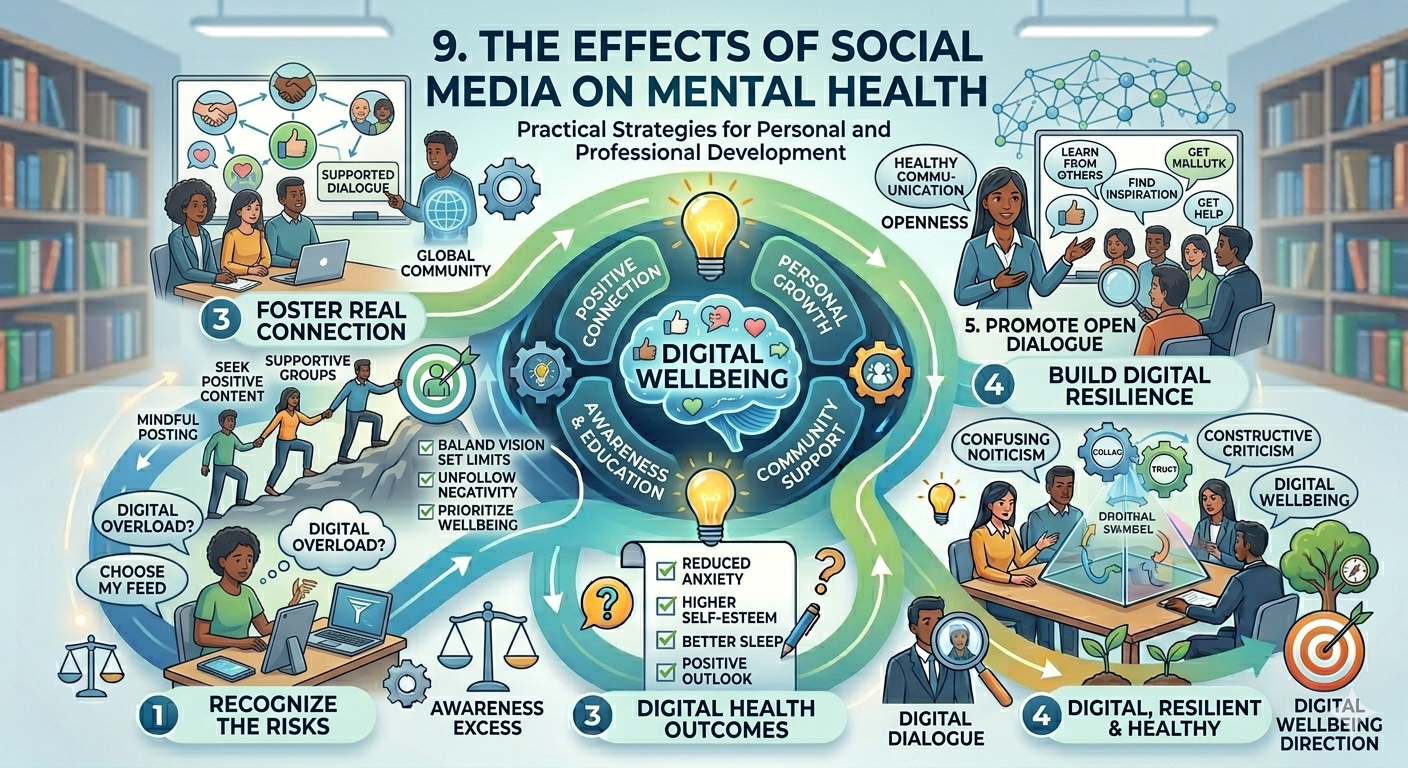
Social media has become an integral part of modern life. Platforms that once served as simple tools for communication have evolved into powerful ecosystems that shape opinions, influence behavior, and impact emotional well-being. While social media offers numerous benefits, including connectivity and access to information, it also raises serious concerns about its effects on mental health.
Understanding the psychological impact of social media is essential for maintaining a healthy relationship with technology and protecting emotional well-being.
What Is Social Media?
Social media refers to digital platforms that allow users to create, share, and interact with content. Popular platforms include
Instagram,
Facebook, and
TikTok.
These platforms enable communication, entertainment, and self-expression, but they also influence how individuals perceive themselves and others.
The Rise of Social Media
Over the past decade, social media usage has increased dramatically. According to research from
Pew Research Center
billions of people worldwide use social media daily.
This widespread adoption has made social media a central part of daily routines, especially among younger generations.
Positive Effects of Social Media on Mental Health
While much of the discussion focuses on negative impacts, social media also offers several benefits.
1. Connection and Community
Social media allows people to stay connected with friends and family, regardless of distance. It also helps individuals find communities with shared interests or experiences.
2. Access to Information
Users can access educational content, mental health resources, and global news instantly.
3. Emotional Support
Online communities can provide support for individuals dealing with challenges such as anxiety, depression, or illness.
4. Self-Expression
Social media offers a platform for creativity and personal expression through posts, videos, and art.
Negative Effects of Social Media on Mental Health
Despite its benefits, social media can negatively impact mental health in several ways.
1. Anxiety and Depression
Excessive use of social media has been linked to increased levels of anxiety and depression. Constant exposure to curated and idealized content can create unrealistic expectations.
Research highlighted by
American Psychological Association
shows a correlation between heavy social media use and mental health issues.
2. Social Comparison
Users often compare their lives to others’ highlight reels, leading to feelings of inadequacy and low self-esteem.
3. Fear of Missing Out (FOMO)
Seeing others’ activities can create a fear of missing out, causing stress and dissatisfaction.
4. Cyberbullying
Online harassment can have severe emotional consequences, especially for teenagers.
5. Addiction and Time Consumption
Social media platforms are designed to keep users engaged, leading to excessive usage and reduced productivity.
The Psychology Behind Social Media Use
Social media platforms use psychological principles to increase engagement.
Dopamine and Reward Systems
Likes, comments, and shares trigger dopamine release, creating a sense of reward and encouraging repeated use.
Validation Seeking
Users often seek approval through likes and comments, which can affect self-worth.
Algorithm Influence
Algorithms prioritize engaging content, often amplifying emotional or sensational material.
Social Media and Self-Esteem
Self-esteem is significantly influenced by online interactions.
- Positive feedback can boost confidence
- Negative comments can harm self-image
- Lack of engagement may lead to self-doubt
Understanding this dynamic helps users manage expectations.
Impact on Sleep and Productivity
Excessive social media use can disrupt sleep patterns and reduce productivity.
- Late-night scrolling affects sleep quality
- Constant notifications interrupt focus
- Time spent online reduces real-world engagement
Social Media and Relationships
Social media affects how people interact in relationships.
Positive Effects
- Staying connected
- Sharing experiences
Negative Effects
- Miscommunication
- Reduced face-to-face interaction
- Jealousy and trust issues
The Role of Social Media in Youth Mental Health
Young people are particularly vulnerable to social media’s effects.
- Developing self-identity
- Peer pressure
- Exposure to unrealistic standards
Parents and educators play a key role in guiding healthy usage.
Managing Social Media for Better Mental Health
1. Set Time Limits
Limit daily usage to prevent overconsumption.
2. Curate Your Feed
Follow accounts that inspire and educate, and unfollow negative influences.
3. Take Regular Breaks
Digital detoxes help reset mental balance.
4. Practice Mindful Usage
Be intentional about why and how you use social media.
5. Avoid Comparison
Remember that social media often shows curated content, not reality.
6. Prioritize Real-Life Connections
Maintain strong offline relationships.
Recognizing Signs of Social Media Overuse
- Feeling anxious without your phone
- Spending excessive time online
- Neglecting responsibilities
- Experiencing mood changes
Recognizing these signs is the first step toward change.
The Future of Social Media and Mental Health
As awareness grows, platforms are introducing features to promote well-being, such as:
- Screen time tracking
- Content moderation
- Mental health resources
However, users must also take responsibility for their habits.
Long-Term Effects
Long-term exposure to unhealthy social media habits can lead to:
- Chronic stress
- Reduced attention span
- Lower self-esteem
Balanced usage can prevent these outcomes.
FAQs
How does social media affect mental health?
It can both positively and negatively impact mental health by influencing emotions, self-esteem, and behavior.
Can social media cause depression?
Excessive use and negative experiences can contribute to symptoms of depression.
What is FOMO?
Fear of Missing Out, a feeling of anxiety caused by seeing others’ activities online.
How can I reduce social media stress?
Limit usage, curate your feed, and take breaks.
Is social media addictive?
Yes, due to its design and reward systems.
Can social media improve mental health?
Yes, through support, connection, and access to resources.
How much time on social media is healthy?
Moderation is key; balance is more important than a fixed number.
What are signs of social media addiction?
Excessive use, anxiety without access, and neglect of responsibilities.
How does social media affect self-esteem?
It can both boost and harm self-esteem depending on interactions and comparisons.
Should I quit social media?
Not necessarily—focus on healthy and mindful usage.
Conclusion
The effects of social media on mental health are complex and multifaceted. While it offers valuable opportunities for connection, learning, and self-expression, it also presents risks such as anxiety, depression, and addiction.
The key lies in balance. By using social media mindfully, setting boundaries, and focusing on positive engagement, individuals can enjoy its benefits while minimizing its negative impact.
Ultimately, social media is a tool—and like any tool, its impact depends on how it is used. By developing awareness and healthy habits, you can take control of your digital life and protect your mental well-being.