In today’s fast-paced and demanding professional environment, stress at work has become a common experience for many individuals. Deadlines, workload pressure, interpersonal conflicts, and the constant need to perform can take a toll on both mental and physical health. While a certain level of stress can motivate performance, excessive stress can lead to burnout, decreased productivity, and serious health issues.
Learning how to manage stress at work is essential not only for maintaining well-being but also for achieving long-term career success. This article explores practical strategies, psychological insights, and actionable steps to help you effectively manage workplace stress.
Understanding Workplace Stress
Workplace stress occurs when job demands exceed an individual’s ability to cope. It can arise from various sources, including:
- Heavy workload
- Tight deadlines
- Lack of control
- Poor communication
- Job insecurity
- Work-life imbalan
Signs and Symptoms of Stress
Recognizing stress is the first step in managing it.
Common signs include:
- Fatigue
- Irritability
- Difficulty concentrating
- Anxiety
- Sleep problems
- Physical symptoms such as headaches
Early awareness allows for timely intervention.
Causes of Stress at Work
Workload Pressure
Excessive tasks and unrealistic expectations can overwhelm employees.
Lack of Control
Limited autonomy over tasks and decisions increases stress.
Poor Work Environment
Noise, clutter, or lack of resources can affect focus and comfort.
Interpersonal Conflicts
Difficult relationships with colleagues or managers can create tension.
Job Insecurity
Uncertainty about job stability can cause anxiety.
The Impact of Stress on Performance
Stress affects:
- Productivity
- Decision-making
- Creativity
- Communication
High stress levels can lead to errors, reduced efficiency, and burnout.
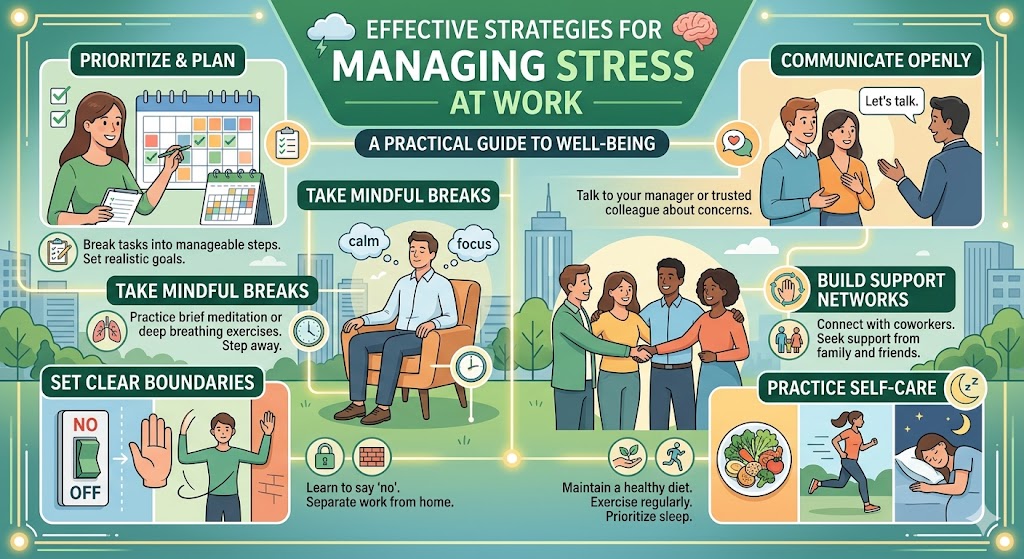
Strategies to Manage Stress at Work
1. Prioritize and Organize Your Tasks
Effective timemanagement reduces stress.
- Create a to-do list
- Set priorities
- Break tasks into smaller steps
Clear organization improves efficiency.
2. Practice Time Management
Use techniques such as:
- Scheduling tasks
- Setting deadlines
- Avoiding procrastination
Time management helps maintain control.
3. Take Regular Breaks
Short breaks improve focus and reduce fatigue.
- Step away from your desk
- Stretch or walk
- Relax your mind
4. Develop Healthy Work Habits
Build routines that support productivity and well-being.
- Start your day with a plan
- Avoid multitasking
- Stay organized
5. Improve Communication
Clear communication reduces misunderstandings.
- Express concerns
- Ask questions
- Provide feedback
6. Set Boundaries
Avoid overworking by setting limits.
- Define work hours
- Learn to say no
- Protect personal time
7. Practice Mindfulness and Relaxation
Mindfulness helps reduce stress.
- Deep breathing
- Meditation
- Staying present
8. Maintain a Healthy Lifestyle
Physical health impacts stress levels.
- Exercise regularly
- Eat balanced meals
- Get enough sleep
9. Seek Support
Talking to others can relieve stress.
- Colleagues
- Friends
- Mentors
10. Focus on What You Can Control
Let go of factors beyond your control.
This reduces unnecessary stress.
The Role of Emotional Intelligence
Emotional intelligence helps manage stress by:
- Recognizing emotions
- Controlling reactions
- Understanding others
It improves relationships and decision-making.
Managing Stress in Remote Work
Remote work presents unique challenges.
To manage stress:
- Create a dedicated workspace
- Maintain a routine
- Stay connected with colleagues
Preventing Burnout
Burnout is a state of chronic stress.
Prevent it by:
- Taking breaks
- Managing workload
- Seeking support
The Importance of Work-Life Balance
Balance is key to reducing stress.
- Allocate time for personal activities
- Avoid overworking
- Prioritize well-being
Long-Term Benefits of Stress Management
- Improved mental health
- Better productivity
- Increased job satisfaction
- Stronger relationships
Common Mistakes to Avoid
- Ignoring stress
- Overcommitting
- Skipping breaks
- Avoiding communication
Avoiding these mistakes improves well-being.
Practical Daily Practices
- Plan your day
- Take short breaks
- Practice gratitude
- Reflect on achievements
Consistency leads to better stress management.
FAQs
What causes stress at work?
Workload, deadlines, and lack of control are common causes.
How can I reduce stress quickly?
Take deep breaths, step away, and relax.
Can stress affect productivity?
Yes, it reduces focus and efficiency.
What is burnout?
A state of chronic physical and emotional exhaustion.
How can I prevent burnout?
Manage workload and maintain balance.
Does exercise help reduce stress?
Yes, it improves physical and mental health.
How important is sleep?
Very important for managing stress.
Can mindfulness reduce stress?
Yes, it promotes relaxation and focus.
Should I talk about stress at work?
Yes, communication helps find solutions.
Can stress be completely eliminated?
No, but it can be effectively managed.
Conclusion
Managing stress at work is essential for maintaining both personal well-being and professional success. While workplace challenges are inevitable, your response to them determines their impact.
By adopting effective strategies such as time management, mindfulness, and healthy habits, you can reduce stress and improve your overall quality of life. Remember, stress is not always avoidable, but it is manageable.
With the right approach, you can create a balanced, productive, and fulfilling work experience—one where you thrive rather than merely survive.